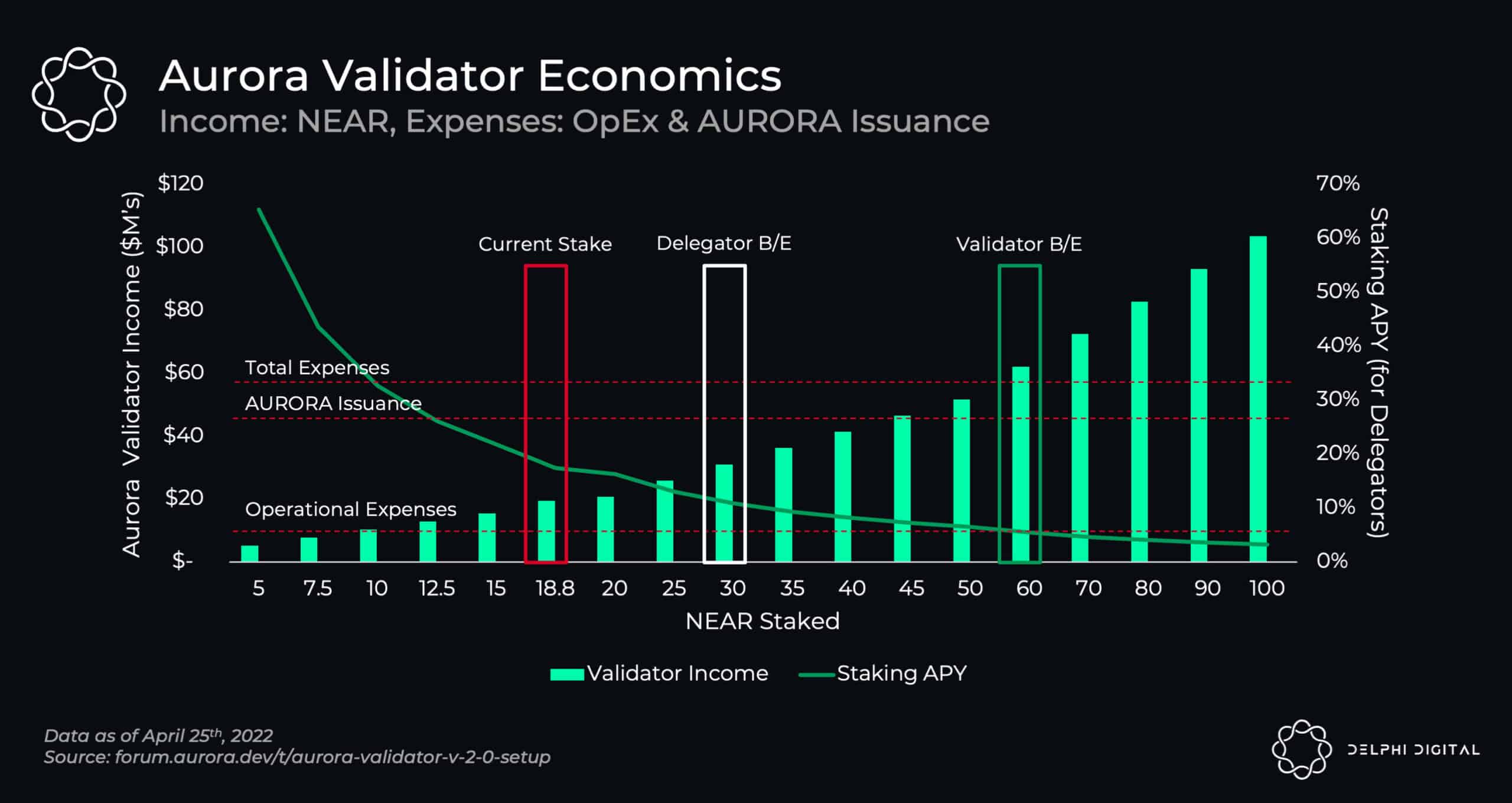
Aurora EVM strategy: Infrastructure updates and market research for Web3 builders
Aurora operates as a Layer 2 solution on the NEAR Protocol, providing full EVM compatibility to Ethereum developers without requiring them to learn a new stack. This architecture allows you to deploy standard Solidity smart contracts on a network that processes transactions in seconds with minimal fees, effectively bridging the gap between Ethereum’s security model and NEAR’s sharding infrastructure.
The core constraint of this strategy is that Aurora is not a standalone chain; it is a smart contract running on NEAR. This means your transactions are secured by NEAR’s proof-of-stake validators rather than Ethereum’s consensus layer. While this offers superior speed and cost efficiency, it introduces a dependency on NEAR’s network health and finality times. You must account for the latency between NEAR block finality and Aurora’s execution when designing time-sensitive dApps.
For Web3 builders, this hybrid model simplifies deployment but complicates security assumptions. You are trading some of Ethereum’s decentralization guarantees for NEAR’s scalability. When evaluating Aurora for your 2026 infrastructure, prioritize projects that leverage this EVM compatibility for high-throughput applications like gaming or micro-transactions, where the fee savings directly impact user retention.
Aurora EVM strategy choices that change the plan
Choosing Aurora means accepting a specific architectural compromise: you gain EVM compatibility and NEAR’s sharded throughput, but you inherit a unique set of operational dependencies. For builders evaluating infrastructure in 2026, the decision hinges on how these tradeoffs align with your application’s latency, security, and cost requirements.
Security and Finality
Aurora operates as a virtual chain on NEAR, meaning its security is derived from the NEAR consensus mechanism rather than Ethereum’s proof-of-stake directly. This offers faster block times but introduces a distinct finality model. You must decide if the trust assumption of NEAR’s validator set is acceptable for your use case, or if you require the deeper security guarantees of Ethereum L1 or a fully decentralized L2 like Optimism.
Cost and Liquidity
While gas fees on Aurora are significantly lower than on Ethereum mainnet, they are denominated in ETH. This creates a hybrid economic model where developers benefit from low transaction costs but remain exposed to ETH price volatility. Liquidity is also fragmented; unlike major L2s that benefit from deep, native liquidity pools, Aurora’s liquidity is often bridged or specific to its ecosystem, which can impact slippage for high-volume DeFi applications.
Interoperability and Tooling
Aurora’s pure Rust EVM implementation offers high performance and efficiency, but it requires careful integration with NEAR’s cross-chain messaging. While EVM tooling (like Hardhat and Foundry) works seamlessly, bridging assets between Ethereum and Aurora involves trust assumptions depending on the bridge used. Builders must evaluate whether the current bridge infrastructure meets their security standards for mainnet deployment.
| Factor | Aurora | Ethereum L1 | Major L2 |
|---|---|---|---|
| Security Model | NEAR Consensus | Ethereum PoS | |
| Gas Token | ETH | ETH | |
| Throughput | High (NEAR Sharding) | Low | |
| Liquidity Depth | Moderate/Niche | Deep | |
| Finality Time | Fast (~1-2 mins) | Slow (~15 mins) |
Choose the next step
Aurora’s infrastructure shifts in 2026 move the network from a pure bridge to a Layer 2 solution on NEAR. This structural change impacts gas fees, finality, and developer tooling. Builders should evaluate these updates against their current roadmap before committing resources.
Assess gas and finality choices that change the plan
Aurora runs as a smart contract on NEAR, allowing for near-instant finality compared to Ethereum’s block times. This reduces user friction for high-frequency applications but requires understanding the bridge mechanics. Evaluate whether your users prioritize speed over the security guarantees of a standalone L1. The cost savings are significant, but the trust model differs from native Ethereum deployments.
Verify developer tooling compatibility
The EVM compatibility means existing Solidity contracts work without modification. However, new features may require updates to your build scripts or RPC endpoints. Check if your preferred development environment, such as Hardhat or Foundry, supports the latest Aurora RPC endpoints. Ensure your CI/CD pipeline can handle the specific block structure of the NEAR-based virtual chains.
Audit security assumptions
Layer 2 solutions introduce bridge risks. Review Aurora’s latest security audits and the NEAR Protocol’s finality guarantees. Understand the withdrawal process and any potential latency during peak network congestion. If your application handles significant value, consider multi-signature wallets or time-locked withdrawals as a standard practice.
Test with a staging deployment
Before a mainnet launch, deploy to Aurora’s testnet. Simulate real-world traffic to identify bottlenecks in gas estimation or transaction batching. Use this phase to verify that your smart contracts behave identically to the Ethereum mainnet environment. Document any discrepancies in gas costs or state access patterns.
Monitor market dynamics
Aurora’s tokenomics and network activity influence developer adoption. Track metrics like total value locked (TVL) and daily active addresses. Use a technical chart to analyze price trends and volume spikes, which often correlate with protocol upgrades or major partnerships. This data helps time your launch for maximum visibility.


As an Amazon Associate, we may earn from qualifying purchases.
Aurora EVM 2026 Strategy: Infrastructure Updates and Market Research for Web3 Builders
Aurora operates as a Layer 2 solution on NEAR Protocol, offering EVM compatibility with enhanced scalability. Its architecture relies on virtual chains that run as smart contracts, allowing developers to leverage NEAR's sharding for speed and low costs.
Identifying Misleading Claims
Some marketing materials suggest Aurora is a standalone L1 blockchain. This is inaccurate. Aurora is an EVM-compatible environment deployed on NEAR. Confusing the two can lead to incorrect infrastructure planning. Always verify the underlying consensus layer.
Common Mistakes in Deployment
Developers often assume standard Ethereum gas models apply directly. Aurora uses a unique gas metering system tied to NEAR’s blockspace. Misconfiguring gas limits can cause transaction failures or excessive costs. Review the gas documentation before deploying contracts.
Proof Checks for Builders
Before integrating, verify the RPC endpoint stability and bridge security audits. Aurora’s bridge has undergone multiple security reviews; ensure you are using the latest verified contracts. Testnet deployments should mimic mainnet gas conditions to avoid surprises.
Key Takeaways
- Aurora is an EVM-compatible L2 on NEAR, not a standalone chain.
- Gas models differ from Ethereum; adjust configurations accordingly.
- Verify bridge contracts and RPC stability before mainnet deployment.
Aurora EVM strategy: what to check next
Before committing resources to the Aurora EVM 2026 strategy, it helps to clarify how the network actually operates. Aurora is not a standalone blockchain; it is a Layer 2 solution running as a smart contract on the NEAR Protocol. This architecture allows it to offer Ethereum Virtual Machine (EVM) compatibility while leveraging NEAR’s horizontal scaling for speed and lower costs.
Here are the practical answers to the most common questions from Web3 builders.
These clarifications should help you assess whether Aurora’s virtual chain model fits your 2026 development roadmap. For real-time market context, you can track the network’s activity and asset performance below.
No comments yet. Be the first to share your thoughts!