What Aurora EVM Infrastructure Actually Is
Aurora is a Layer 2 blockchain solution built on the NEAR Protocol that provides Ethereum Virtual Machine (EVM) compatibility with enhanced scalability. Unlike traditional Layer 2s such as Arbitrum or Optimism, which operate as distinct rollup networks with their own sequencers and complex bridge mechanics, Aurora functions as a smart contract deployed directly on the NEAR mainnet. This architectural choice allows Aurora to leverage NEAR’s high-throughput consensus without requiring users to navigate separate token bridges or manage separate gas economies.
The core innovation of Aurora is its support for "virtual chains." These are fully customizable, EVM-compatible chains that run as smart contracts on NEAR. For developers, this means the ability to spin up isolated environments for specific dApps or enterprise needs while sharing the underlying security and liquidity of the NEAR network. It effectively decouples the execution environment from the settlement layer, offering a modular approach to scalability that traditional L2s struggle to match.
This infrastructure bridges the gap between Ethereum’s vast developer ecosystem and NEAR’s performance advantages. By running as a contract, Aurora benefits from NEAR’s Proof-of-Stake security model, which is generally faster and more energy-efficient than Ethereum’s legacy consensus. The result is a network that feels like Ethereum to developers—supporting Solidity and standard tooling—but operates with the speed and low transaction costs inherent to NEAR’s sharded architecture.
Virtual chain architecture
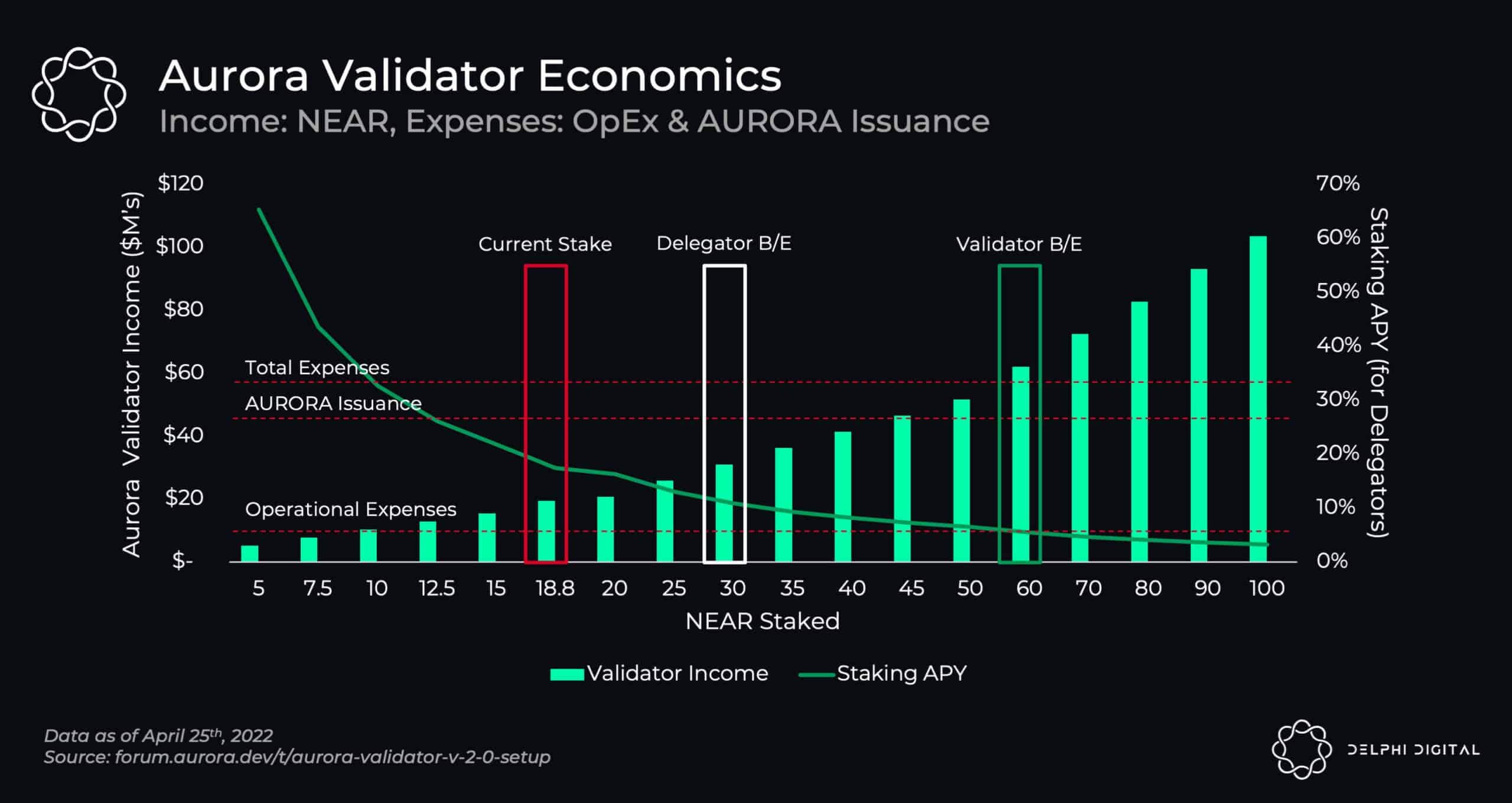
Aurora EVM infrastructure operates on a distinct architectural model: it deploys EVM-compatible chains as smart contracts on the NEAR Protocol rather than as independent Layer 1 networks. This approach allows developers to spin up fully customizable, isolated chains that inherit NEAR’s security and scalability without managing separate validator sets or consensus mechanisms. As described on aurora.dev, these virtual chains offer the speed and throughput required for high-performance decentralized applications while maintaining full compatibility with Ethereum tooling.
The foundation of this system is a high-performance, pure Rust implementation of the EVM. By rewriting the execution layer in Rust, Aurora achieves greater efficiency and security compared to traditional Go-based EVM clients. This implementation ensures that smart contracts written for Ethereum run exactly as intended, providing a seamless migration path for developers. The underlying NEAR Protocol handles the heavy lifting of consensus and sharding, allowing Aurora EVM infrastructure to process transactions with minimal latency and significantly lower fees.
This architecture decouples execution from consensus. Developers can deploy virtual chains tailored to specific use cases, whether for gaming, DeFi, or enterprise solutions, while relying on NEAR’s robust infrastructure. Aurora Cloud provides the tools to deploy production-ready virtual chains, ensuring that each chain benefits from NEAR’s full security guarantees. This modular design enables high throughput and scalability, making it a viable alternative to traditional Layer 2 solutions.
Essential Developer Tools and SDKs
Building on Aurora EVM infrastructure requires a specific set of tools that bridge the gap between Ethereum development standards and NEAR’s high-performance execution environment. For developers, the primary advantage is familiarity; standard Ethereum tooling works with minimal friction, but leveraging Aurora’s unique capabilities often requires integrating specific SDKs and deployment utilities.
Core SDKs and IDE Integration
The foundation of any Aurora-based project is the aurora-sdk, which provides the necessary interfaces for interacting with the network. This SDK handles the complex transaction signing and routing required to ensure contracts execute correctly on the NEAR layer while maintaining EVM compatibility. Developers typically integrate this via standard package managers like npm or yarn, making it easy to add to existing Truffle, Hardhat, or Foundry projects.
For those using integrated development environments, plugins are available to streamline the local development experience. These tools allow developers to spin up local testnets that mirror Aurora’s mainnet configuration, ensuring that gas estimation and state transitions behave as expected before deployment. This reduces the debugging cycle significantly compared to deploying directly to mainnet or testnets without local validation.
Deployment and Bridge Utilities
Deploying smart contracts to Aurora is handled through standard EVM deployment scripts, but the underlying mechanics differ from a standalone L1. Aurora Labs provides specialized CLI tools that package the contract bytecode and submit it to the NEAR network for execution. This process is automated in many modern frameworks, abstracting away the need for developers to manually manage NEAR account creation or cross-chain messaging.
For liquidity and asset movement, the Aurora Bridge is the primary utility. It allows users and developers to lock assets on Ethereum and mint corresponding wrapped tokens on Aurora. This bridge is critical for any dApp that requires native ETH or ERC-20 tokens to function. The bridge operates with finality times that are significantly faster than Ethereum’s standard block confirmation, providing a smoother user experience for onboarding from the Ethereum mainnet.
Aurora Cloud for Custom Chains
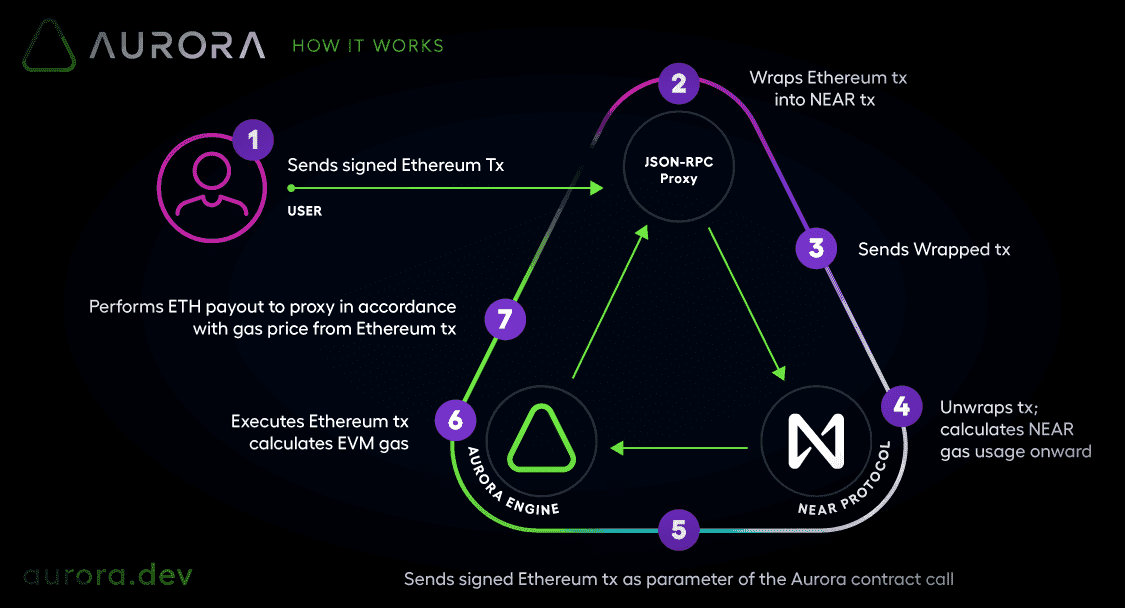
Beyond standard dApp deployment, Aurora offers Aurora Cloud for developers who need to launch dedicated virtual chains. This service allows teams to spin up EVM-compatible blockchains that inherit NEAR’s security and scalability without managing the underlying infrastructure. It is particularly useful for projects that require high throughput and custom governance models, such as gaming or social applications.
Aurora Cloud simplifies the operational overhead of running a blockchain. Instead of managing validators and consensus mechanisms, developers can focus on smart contract logic and user acquisition. The platform provides built-in tools for monitoring, node management, and scaling, making it a robust option for enterprise-level applications that demand reliability and performance.
| Tool | Primary Purpose | Integration Level |
|---|---|---|
| aurora-sdk | Network interaction and transaction signing | High |
| Aurora Bridge | Asset transfer between Ethereum and Aurora | Medium |
| Aurora Cloud | Deploying custom virtual chains | Platform |
| Hardhat/Foundry Plugins | Local testing and deployment automation | High |
Strategic Use Cases for Virtual Chains
Aurora’s infrastructure enables developers to spin up "virtual chains"—dedicated EVM environments running on NEAR Protocol. This architecture offers a distinct competitive advantage for verticals requiring high throughput without sacrificing Ethereum compatibility. By leveraging NEAR’s sharded infrastructure, Aurora provides the speed and low fees necessary for consumer-facing applications that standard Ethereum Layer 2s might struggle to support at scale.
Gaming and Social Applications
Blockchain gaming and social platforms demand near-instant finality and negligible transaction costs to function as viable user experiences. Aurora’s virtual chains allow developers to isolate these workloads, ensuring that game logic or social interactions do not congest the main network. This separation enables a seamless experience where users interact with smart contracts without managing gas tokens or waiting for block confirmations. The ability to customize the environment while retaining EVM tooling familiarity reduces development friction significantly.
DeFi and High-Frequency Trading
For decentralized finance (DeFi), speed is a direct proxy for capital efficiency. Aurora’s infrastructure supports high-frequency trading and complex financial instruments by processing transactions rapidly and cheaply. Developers can deploy specialized liquidity pools or automated market makers that react to market conditions in real-time. The underlying NEAR security model ensures that these high-volume operations remain robust against attacks, providing a secure foundation for capital-intensive applications.
Technical Performance
The performance of Aurora’s infrastructure is best understood through its market and technical behavior. The following chart illustrates the recent price action of NEAR, the underlying asset securing Aurora’s virtual chains.
Market Position and Ecosystem Growth
Aurora’s market standing in 2026 is defined by its unique position as the primary EVM infrastructure layer on NEAR. Rather than competing directly with Ethereum mainnet, Aurora serves as a high-throughput bridge, allowing developers to deploy standard EVM smart contracts with NEAR-level scalability. This infrastructure approach has stabilized its Total Value Locked (TVL), which fluctuates with broader crypto market cycles but remains anchored by its utility as a cost-effective deployment environment.
The network’s adoption metrics show a shift from speculative activity to sustained developer usage. By leveraging NEAR’s Nightshade sharding, Aurora processes transactions significantly faster and cheaper than legacy L1s, attracting projects focused on high-frequency trading and micro-transactions. This infrastructure efficiency is critical for maintaining relevance in a crowded L2 landscape where user experience is the primary differentiator.
To gauge real-time market sentiment, traders monitor Aurora’s price action alongside its underlying NEAR token. The following widgets provide live data on Aurora’s market performance and technical indicators.
Developer Checklist for Aurora Deployment
Launching a virtual chain or dApp on Aurora EVM Infrastructure requires aligning your tooling with NEAR’s underlying architecture. Because Aurora is an EVM-compatible Layer 2, you can leverage familiar Ethereum development stacks while accessing NEAR’s sharded throughput. This checklist ensures your deployment is efficient, secure, and cost-effective from day one.
Install the Aurora CLI or configure Hardhat/Foundry with the Aurora Mainnet RPC endpoint. Verify your wallet supports NEAR account linking if your dApp requires cross-chain identity. This step establishes the baseline connectivity needed to interact with the Aurora EVM.
Before touching mainnet funds, deploy your smart contract to the Aurora Testnet. Use the official faucet to obtain test tokens. This phase validates your gas estimation logic and ensures your contract interacts correctly with Aurora’s EVM implementation without risking real assets.
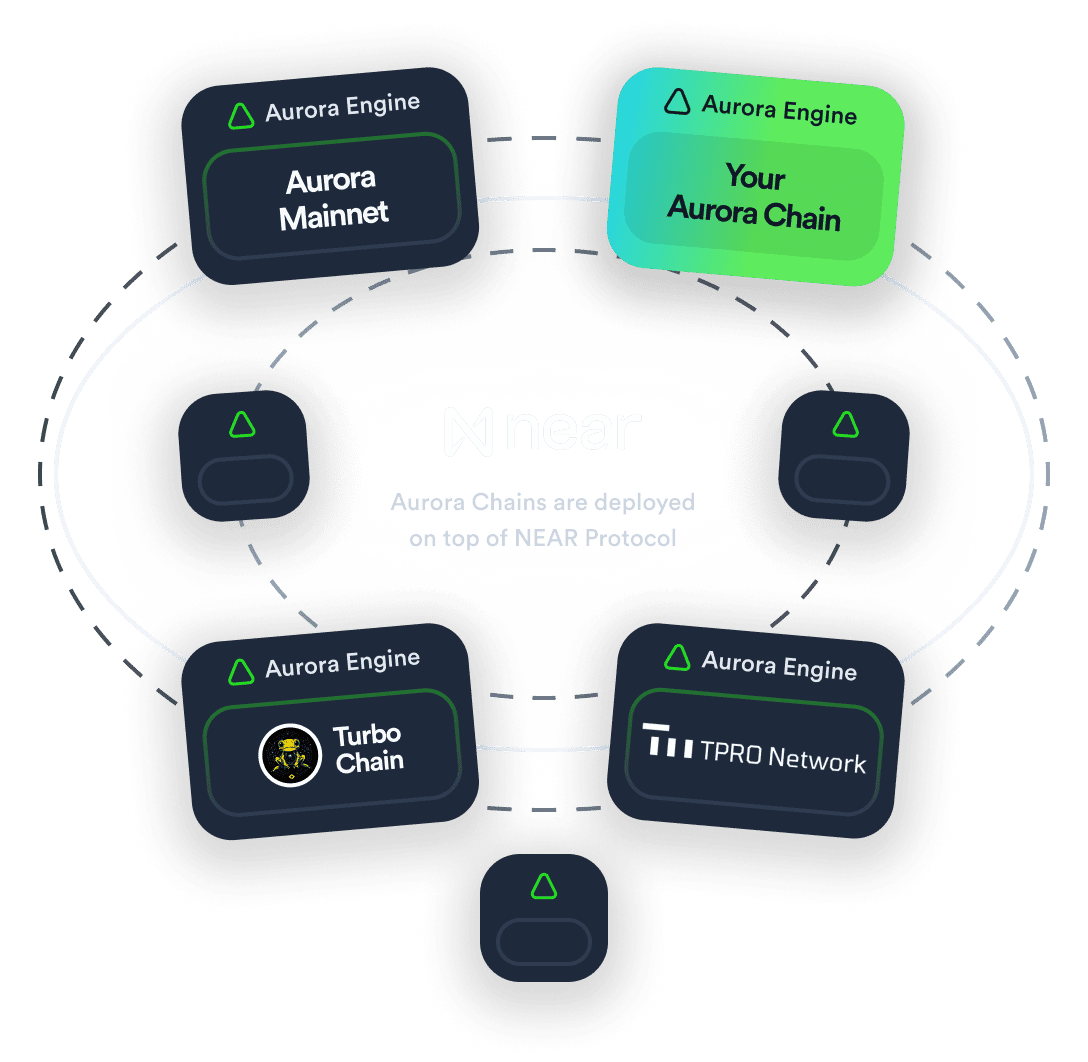
Aurora’s gas pricing differs slightly from Ethereum L1 due to its NEAR integration. Review your contract’s computational complexity to minimize gas costs. Use the Aurora Explorer to simulate transactions and verify that your deployment fits within expected cost thresholds for your target user base.

If your dApp targets non-crypto-native users, integrate NEAR account linking. This allows users to sign transactions with a NEAR account, bypassing the need for complex seed phrase management. This feature is a core differentiator of Aurora’s EVM Infrastructure and significantly improves onboarding conversion.
Deploy your verified contract to Aurora Mainnet. Immediately monitor transaction success rates and gas usage via the Aurora Cloud dashboard. Keep an eye on NEAR protocol health, as Aurora’s performance is directly tied to the underlying shard structure.
Frequently asked: what to check next
What is Aurora Blockchain?
Aurora is a Layer 2 blockchain solution built on the NEAR Protocol that provides Ethereum Virtual Machine (EVM) compatibility with enhanced scalability and significantly lower transaction costs. It allows developers to deploy existing Ethereum smart contracts without modification, leveraging NEAR's sharding for throughput. This infrastructure bridges the gap between Ethereum's security and NEAR's speed, making it a viable option for high-frequency DeFi applications.
What is the EVM for Ethereum?
The Ethereum Virtual Machine (EVM) is a decentralized computation engine that executes smart contracts and updates the state of the Ethereum network. It serves as the runtime environment for decentralized applications (dApps), ensuring that all nodes in the network agree on the outcome of every transaction. Aurora implements the EVM to ensure seamless interoperability with the broader Ethereum ecosystem, including wallets, tools, and libraries.
What is the Aurora network?
In the context of blockchain infrastructure, "Aurora" refers specifically to the Aurora Labs project on NEAR. It is distinct from Aurora Networks, a telecommunications company. For developers and investors, the primary focus is on the Aurora EVM infrastructure, which processes transactions on the NEAR chain while maintaining EVM standards. This distinction is critical when researching market data or technical documentation.
Helpful gear
Use these product recommendations as a starting point, then choose the size, material, and price point that fit how you actually use the gear.


As an Amazon Associate, we may earn from qualifying purchases.
No comments yet. Be the first to share your thoughts!