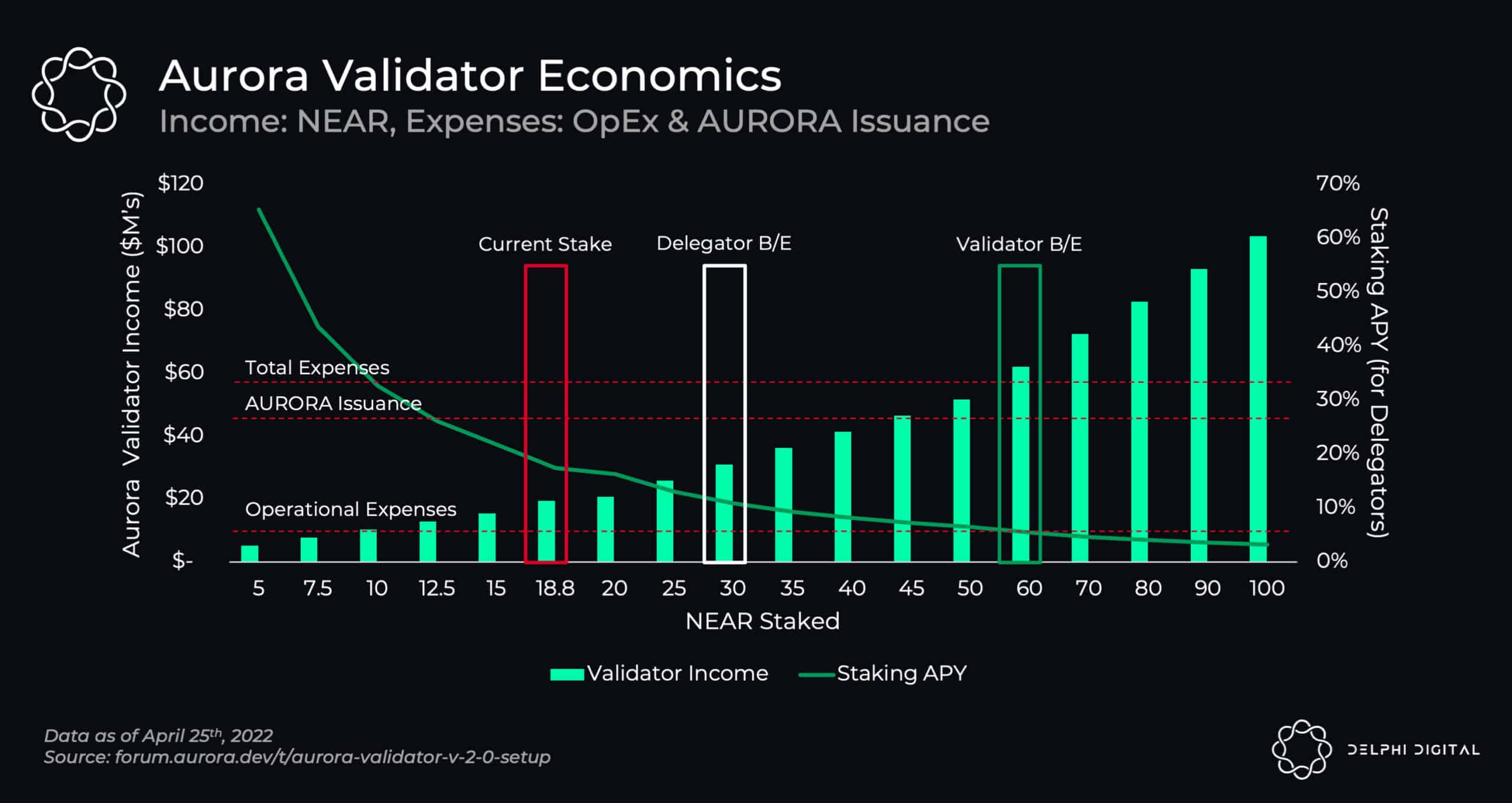
Aurora EVM analysis
Aurora operates as an EVM-compatible layer on the NEAR Protocol, allowing developers to deploy existing Ethereum smart contracts without rewriting code. This architecture provides high throughput and low transaction fees while inheriting NEAR’s sharded security model. For Web3 developers, the primary value proposition is the ability to scale dApps horizontally without sacrificing the Ethereum developer experience.
The infrastructure relies on Virtual Chains, which are fully customizable EVM instances running as smart contracts on NEAR. This means that unlike traditional sidechains, Aurora does not require a separate consensus layer or bridge infrastructure in the traditional sense. Developers can launch their own specialized chains that share security with the main NEAR network, offering a flexible environment for both general-purpose and niche applications.
When evaluating Aurora for 2026, the focus should be on its integration depth with the NEAR ecosystem and the maturity of its tooling. The network has moved beyond early-stage experimentation, with established liquidity and a growing suite of developer resources. However, the trade-off involves relying on NEAR’s broader network health, meaning Aurora’s performance is tied to the underlying sharding efficiency of the base layer.
Aurora evm analysis choices that change the plan
Choosing Aurora means selecting a specific architectural path: running EVM smart contracts as sidecars on the NEAR blockchain. This approach offers distinct advantages in throughput and transaction finality, but it introduces complexity in how developers interact with the underlying consensus layer. Before committing resources, it is essential to weigh the operational benefits against the specific constraints of a sharded L1 environment.
The primary tradeoff centers on abstraction versus control. Aurora virtualizes the EVM, allowing developers to write standard Solidity code while relying on NEAR for data availability and security. This eliminates the need to manage validators or bridge assets through complex cross-chain protocols, significantly reducing the operational overhead for new chains. However, this convenience comes with a dependency on NEAR’s health; if the underlying L1 experiences congestion or downtime, Aurora’s throughput and finality are directly impacted.
| Factor | Aurora (NEAR Sidecar) | Standalone L1 | Layer 2 Rollup |
|---|---|---|---|
| Consensus Control | None (NEAR handles consensus) | Full control | Dependent on L1 security |
| EVM Compatibility | Full native support | Varies by chain | Full native support |
| Finality Speed | Fast (NEAR block time) | Slow to moderate | Slow (L1 settlement) |
| Data Availability | NEAR sharding | Own chain storage | L1 or blob space |
| Bridge Risk | Minimal (native integration) | High (external bridges) | Moderate (L1 bridge) |
Liquidity fragmentation is another critical consideration. Because Aurora operates as a virtual chain, it does not natively share liquidity with other EVM chains or even the broader NEAR ecosystem without explicit bridging. Developers must actively manage liquidity pools and token deployments, which can be more labor-intensive than deploying on a high-liquidity L2 like Arbitrum or Optimism. For applications requiring deep liquidity from day one, this fragmentation can be a significant barrier to adoption.
Security models also differ markedly. Aurora inherits NEAR’s proof-of-stake security, which is generally considered robust for a high-throughput L1. However, this means Aurora cannot offer the same level of censorship resistance or independent security guarantees as a standalone L1. For applications where regulatory compliance or absolute independence is paramount, this reliance on a third-party L1 may be a disqualifying factor.
Ultimately, the decision hinges on the application’s specific needs. Aurora is ideal for projects prioritizing speed, low costs, and ease of deployment over independent security guarantees. For applications requiring deep liquidity or full sovereignty, other EVM-compatible solutions may offer better long-term strategic alignment.
Choose the Next Step: A Practical Decision Framework
Selecting the right Aurora EVM infrastructure depends on your specific deployment needs, whether you prioritize raw scalability, cost efficiency, or seamless NEAR ecosystem integration. The following steps outline a decision framework to help you evaluate tools and partners for 2026.
1. Define Your Deployment Model
Start by determining whether you need a shared virtual chain or a dedicated instance. Aurora’s virtual chains allow developers to spin up fully customizable, EVM-compatible environments that run as smart contracts on NEAR. This model offers significant scalability and speed advantages over shared mainnet resources. If your application requires high throughput with predictable gas fees, a dedicated virtual chain is likely the better fit compared to a shared environment where resources are contested.
2. Evaluate Infrastructure Providers
Not all Aurora infrastructure providers offer the same level of support or technical capability. Look for providers that offer robust node infrastructure, reliable RPC endpoints, and dedicated support channels. Since Aurora runs on NEAR, ensure your provider has deep expertise in both EVM tooling and NEAR’s sharding architecture. This dual expertise is critical for troubleshooting complex issues that arise from the interaction between EVM smart contracts and the underlying NEAR protocol.
3. Assess Developer Tooling and SDKs
The quality of developer tooling directly impacts your deployment speed and maintenance costs. Evaluate the SDKs, documentation, and testing frameworks provided by your infrastructure partner. Look for comprehensive guides on deploying contracts, managing keys, and interacting with the chain. Good tooling should include local testing environments, automated deployment scripts, and clear error messages that help you identify issues quickly.
4. Consider Security and Compliance
Security is paramount when deploying smart contracts. Ensure your infrastructure provider offers security audits, monitoring tools, and incident response plans. Look for providers that have undergone third-party security audits and have a transparent track record of handling vulnerabilities. Compliance with relevant regulations, such as data privacy laws, should also be a key consideration, especially if your application handles user data.
5. Analyze Cost Structures
Understand the full cost of deployment, including gas fees, node hosting, and any additional services. Aurora’s model allows for more predictable gas costs compared to traditional EVM chains, but this can vary based on network congestion and your specific usage patterns. Compare the pricing models of different providers, looking for transparent fee structures without hidden costs. Consider the total cost of ownership, including maintenance and scaling expenses, over the lifecycle of your project.
6. Plan for Scaling and Maintenance
Finally, think about how your infrastructure will scale as your user base grows. Aurora’s virtual chains are designed to scale horizontally, but you need a partner who can help you manage this growth. Look for providers that offer auto-scaling capabilities, load balancing, and easy migration paths to larger instances. Regular maintenance and updates are also essential to keep your infrastructure secure and performant.


As an Amazon Associate, we may earn from qualifying purchases.
Spotting Weak Options and Misleading Claims
Aurora’s architecture as an EVM-compatible chain on NEAR offers distinct advantages, but the ecosystem is crowded with tools that overpromise on performance. When evaluating infrastructure for 2026, developers must separate the underlying protocol from the third-party wrappers and dashboards that often misrepresent latency and finality. The primary keyword cluster here is Aurora EVM infrastructure, which requires a clear-eyed view of the actual developer experience versus marketing copy.
Many tools claim "instant finality," but on Aurora, this depends heavily on the NEAR block time and the specific bridge mechanism used. A common mistake is assuming that EVM compatibility means identical gas dynamics to Ethereum mainnet. The gas models differ, and failing to account for NEAR’s sharding can lead to unexpected costs during peak congestion. Always test against the official Aurora devnet before committing to a production stack.
The market is also seeing a surge in "virtual chain" solutions that sound similar but operate with different security assumptions. While Aurora’s virtual chains are fully customizable, they inherit NEAR’s security model. Beware of platforms that imply independent validator sets without clarifying the bridge risk. For a quick check on the network's current state, you can monitor the live price and technical indicators below.
If you are building a dApp, prioritize tools that offer transparent node health metrics. Avoid any service that hides its RPC endpoint sources or fails to provide clear documentation on transaction propagation times. The difference between a robust infrastructure and a fragile one often comes down to these granular details, not just the headline features.
No comments yet. Be the first to share your thoughts!