How Aurora runs on NEAR
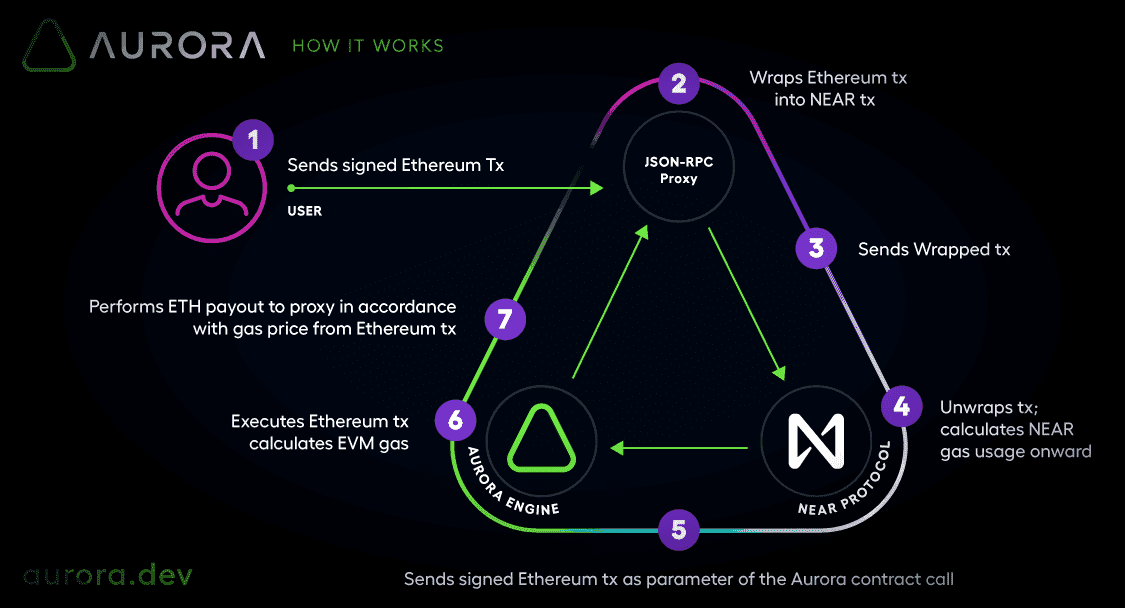
Aurora operates as a fully EVM-compatible layer on the NEAR Protocol, but its architecture differs significantly from traditional sidechains. Instead of maintaining a separate blockchain network, Aurora is implemented as a smart contract that lives directly on the NEAR mainnet. This design allows it to execute Ethereum-style transactions while inheriting NEAR’s underlying infrastructure, effectively merging the developer familiarity of Ethereum with the throughput of a sharded L1.
The core of this system is a pure Rust implementation of the Ethereum Virtual Machine (EVM). By rewriting the EVM runtime in Rust, Aurora achieves high performance and security without relying on legacy codebases. This native integration means that Aurora blocks are produced as part of NEAR’s block production process, ensuring that the two networks remain synchronized. Developers can deploy Solidity contracts that run on Aurora just as they would on Ethereum, but the execution happens within the NEAR state trie.
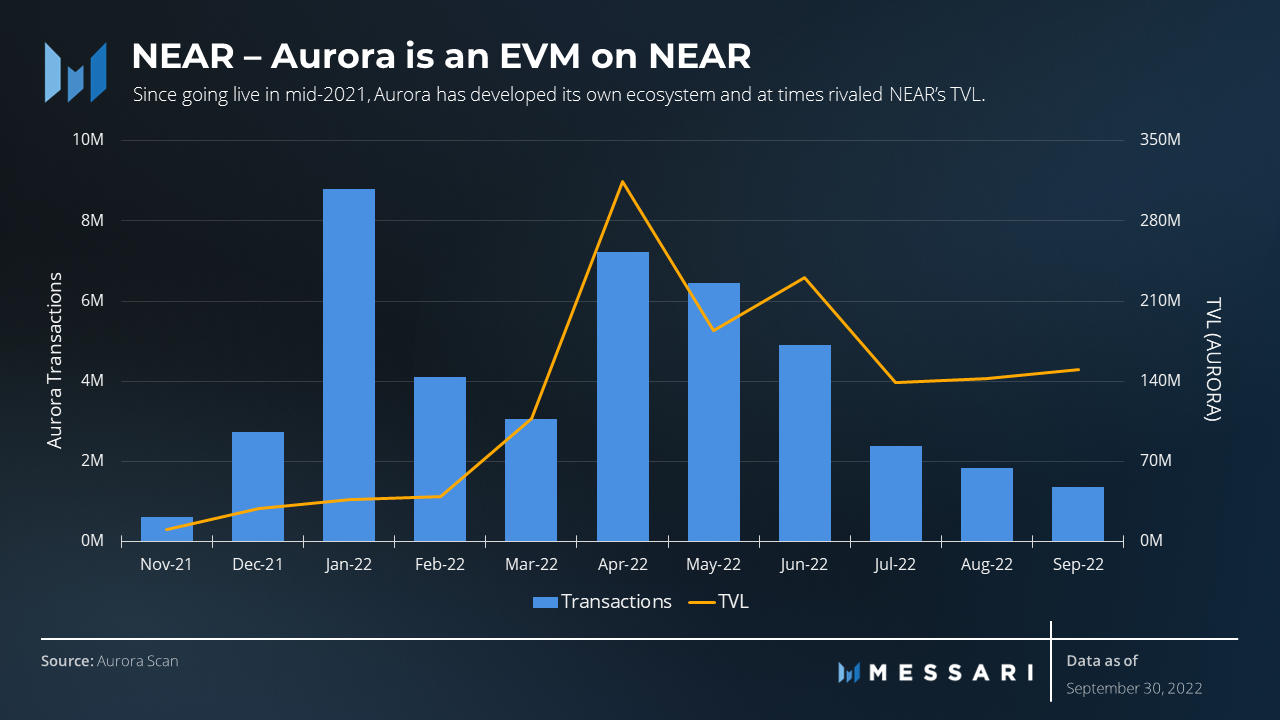
This architecture provides a distinct advantage in scalability. Because Aurora leverages NEAR’s Nightshade sharding, it can process transactions in parallel with other shards on the network. This eliminates the congestion often seen on the Ethereum mainnet during peak usage. The result is a network that offers near-instant finality and low fees, while remaining fully compatible with the vast ecosystem of Ethereum tools, wallets, and dApps. For a deeper look at the technical implementation, see the Aurora EVM repository on GitHub.
Current market performance
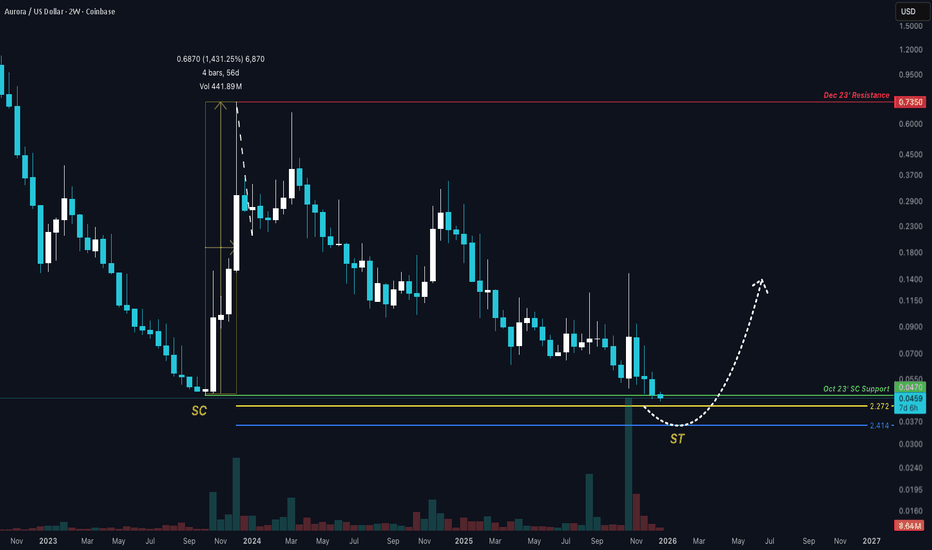
Aurora (AURORA) trades as a distinct asset within the broader NEAR ecosystem, reflecting its role as a leading EVM scaling solution. The token’s price action is closely tied to the health of the NEAR Protocol and the adoption of its virtual chains. Unlike static snapshots, the AURORA/USD pair requires real-time monitoring to capture volatility driven by cross-chain liquidity flows and network upgrade cycles.
Market participants often compare Aurora’s performance against other Layer 2 solutions and EVM-compatible chains. While Ethereum remains the primary settlement layer, Aurora’s low transaction costs and high throughput provide a competitive alternative for developers. This utility drives demand for the AURORA token, which is used for gas fees, staking, and governance within the network.
Infrastructure upgrades and virtual chains
Aurora’s architecture has shifted from a single monolithic chain to a modular ecosystem through its Virtual Chains feature. This upgrade allows developers to deploy fully customizable, EVM-compatible chains that run as smart contracts directly on the NEAR Protocol. Instead of being confined to a single shared ledger, projects can now spin up independent environments tailored to their specific scalability and customization needs.
These virtual chains operate as lightweight EVM instances, leveraging NEAR’s sharding technology to process transactions in parallel. This design decouples the execution layer from the consensus layer, meaning that one virtual chain’s congestion or downtime does not impact others. The result is a network where multiple EVM-compatible environments can coexist, each with its own governance rules, tokenomics, and performance characteristics, all secured by the underlying NEAR blockchain.
The shift to Virtual Chains addresses the primary bottleneck of early Ethereum Layer 2s: shared resource contention. By allowing each application or consortium to run its own chain, Aurora enables true parallel scalability. Developers can optimize gas fees and block times for their specific use cases, whether that requires high-throughput microtransactions or deterministic finality for financial instruments.
This modular approach transforms Aurora from a simple EVM bridge into a platform for building purpose-built blockchains. It aligns with the broader industry trend toward modularity, where specialized chains handle specific workloads while relying on a shared security layer. For developers, this means greater flexibility and control over the infrastructure that powers their applications.
| Feature | Standard Aurora | Virtual Chains |
|---|---|---|
| Customization | Limited to EVM defaults | Full EVM + NEAR features |
| Scalability | Shared chain resources | Independent parallel execution |
| Governance | Network-wide consensus | Per-chain configuration |
| Security | NEAR Proof-of-Stake | NEAR Proof-of-Stake |
Road to decentralization
Aurora is moving from a centralized testnet to a fully decentralized mainnet. This shift is not just a technical upgrade; it is a strategic restructuring of how the network is governed and secured. By transitioning to a decentralized validator set, Aurora aims to eliminate single points of failure and align its incentives with the broader NEAR ecosystem.
The move toward decentralization addresses the core limitations of early-stage blockchain infrastructure. In the testnet phase, a limited number of nodes managed the network, creating trust assumptions that are unsustainable for a production-grade EVM. The new architecture distributes this responsibility across a wider, more diverse set of validators, ensuring that no single entity can unilaterally control the chain or censor transactions.
Governance improvements are central to this transition. Decentralized governance allows token holders to participate in critical decisions, from protocol upgrades to fee structures. This community-driven approach fosters transparency and resilience, making the network more adaptable to changing market conditions and security threats.
Security is equally critical. A decentralized validator set makes it significantly harder for attackers to compromise the network. By requiring consensus among a large, distributed group of nodes, Aurora raises the cost of attack and ensures that the ledger remains immutable and trustworthy for developers and users alike.
Key milestone: The transition to a decentralized validator set marks Aurora’s maturity as a serious EVM competitor on NEAR.
This structural evolution positions Aurora to handle higher throughput and more complex smart contracts without sacrificing security. As the network continues to decentralize, it lays the groundwork for a more robust and sustainable ecosystem for EVM development.
Building on Aurora: A Developer’s Guide
Migrating to Aurora feels less like learning a new language and more like moving to a city with the same street grid but wider roads. As an EVM-compatible virtual chain built on NEAR, Aurora allows developers to deploy existing Ethereum smart contracts with minimal friction. You keep your Solidity tooling, but you gain the speed and low costs of NEAR’s sharded infrastructure.
1. Set Up Your Environment
Start by configuring your development environment to recognize Aurora as a target network. Since Aurora is fully EVM-compatible, standard tools like Hardhat, Truffle, and Foundry work out of the box. You simply need to update your network configuration to point to Aurora’s RPC endpoints. This step ensures your local development and testing pipelines remain unchanged while you prepare for mainnet deployment.
2. Audit for Virtual Chain Specifics
While most Solidity code is portable, virtual chains have unique execution environments. Review your contracts for any reliance on specific Ethereum block attributes or gas mechanics that might behave differently on NEAR. Check for any hardcoded chain IDs or network-specific logic that assumes a pure Ethereum L1 environment. This audit prevents unexpected behavior during the migration phase.
3. Deploy and Verify
Once your contracts are ready, deploy them to Aurora using your preferred deployment script. After deployment, verify your source code on Aurora’s block explorers to ensure transparency and trust. This step is critical for dApps that interact with DeFi protocols or NFT marketplaces, as verified contracts are often a prerequisite for integration.
Update your wallet (like MetaMask) to include the Aurora network. Add the correct Chain ID and RPC URL from the Aurora documentation. This allows your frontend to sign transactions directly on the virtual chain.
Deploy your contracts to the Aurora Testnet first. Use faucet tokens to test gas fees and transaction speeds. Verify that your dApp’s frontend correctly reads and writes data to the testnet contracts.
Once testing is complete, deploy to the Aurora Mainnet. Monitor the first few transactions closely to ensure smooth execution. Consider using a block explorer to track gas usage and confirm block times are as expected.
4. Leverage NEAR’s Ecosystem
Aurora is not an island. One of its biggest advantages is seamless access to NEAR’s ecosystem. You can bridge assets from Ethereum or other chains to Aurora and interact with NEAR-native dApps. This interoperability opens up new user bases and liquidity pools that are otherwise inaccessible on pure Ethereum L2s.
| Feature | Ethereum L2 | Aurora (NEAR) |
|---|---|---|
| Gas Fees | Higher | Lower |
| Finality | ~12-15 mins | ~1-2 mins |
| Tooling | Standard EVM | Standard EVM |
5. Optimize for Virtual Chains
Finally, optimize your dApp for the unique characteristics of virtual chains. Aurora’s block time is faster than Ethereum’s, so adjust any time-based logic in your smart contracts accordingly. Consider using NEAR’s native features, like account abstraction, to improve user experience. This optimization ensures your dApp runs efficiently and provides a better experience for users coming from Ethereum.
Aurora NFTs and cross-chain future
Aurora operates as an Ethereum Virtual Machine (EVM) implementation on the NEAR Protocol. This architecture allows developers to deploy Ethereum-style smart contracts while leveraging NEAR’s high throughput and low costs. For NFT creators, this means minting and trading digital assets with significantly reduced gas fees compared to Ethereum mainnet.
The primary value proposition lies in cross-chain interoperability. Aurora plans to enable NFTs to move seamlessly between the NEAR and Ethereum networks. This functionality aims to bridge the liquidity gap between the two ecosystems, allowing assets to access deeper markets on Ethereum while benefiting from NEAR’s speed during active trading.
This dual-chain approach positions Aurora as a critical infrastructure layer. By reducing friction for asset movement, the platform seeks to make NFTs more accessible to users who might otherwise be deterred by Ethereum’s transaction costs. The success of this model depends on robust bridge security and widespread adoption across both networks.
Common questions about Aurora
What is Aurora’s native token?
AURORA is the native token used for transaction fees and governance. It is required to pay for gas on the network and allows holders to participate in protocol decisions through staking and voting mechanisms.
Can I use MetaMask with Aurora?
Yes, Aurora is EVM-compatible, so MetaMask and other Ethereum wallets work natively. You can add the Aurora network to your wallet by importing the correct Chain ID and RPC URL, allowing you to interact with dApps on Aurora just as you would on Ethereum.
How does Aurora differ from NEAR?
NEAR is the base layer chain, while Aurora is a sidechain that implements the Ethereum Virtual Machine on top of it. NEAR uses its own smart contract language (Rust/AssemblyScript), whereas Aurora allows developers to use Solidity and standard Ethereum tooling, bridging the two ecosystems.
No comments yet. Be the first to share your thoughts!