How Aurora EVM Works
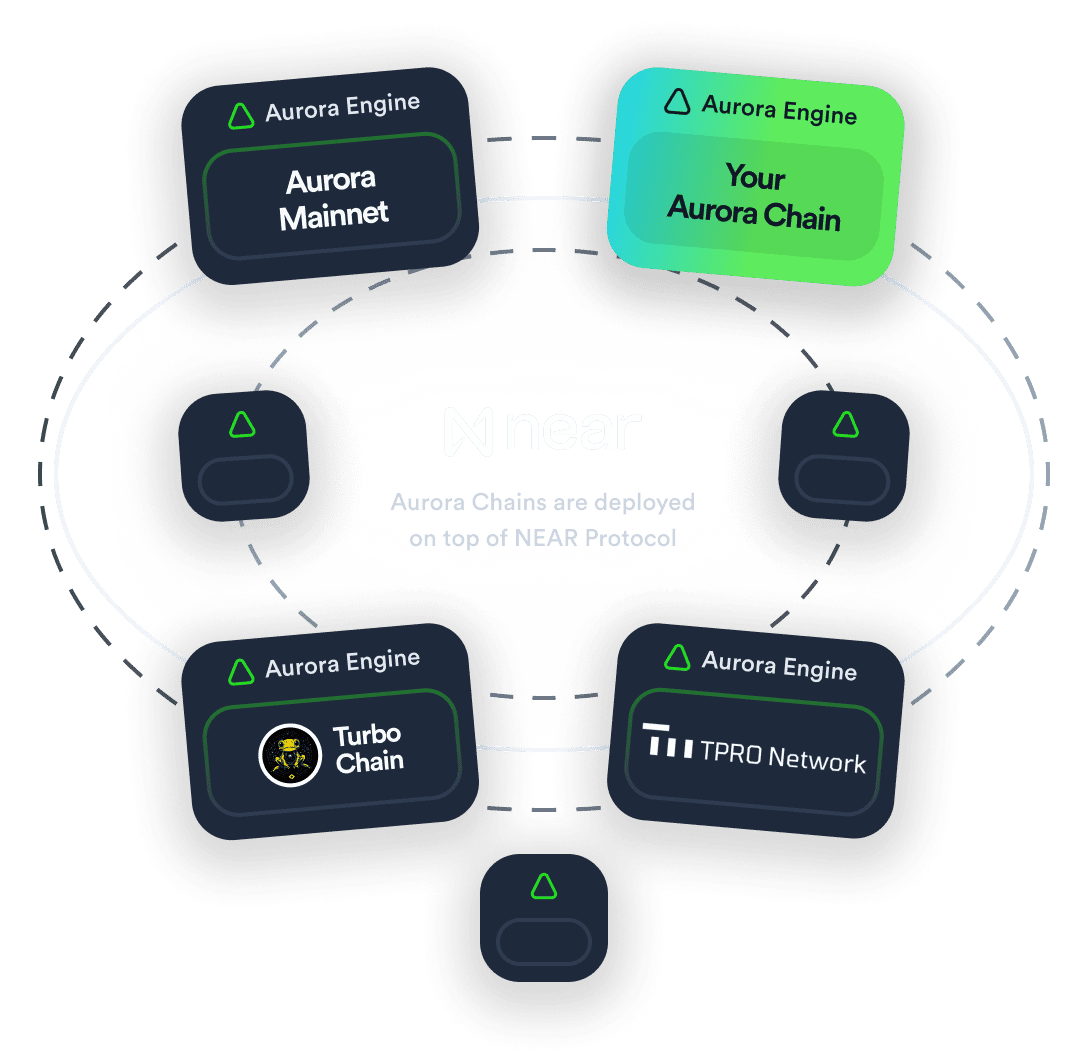
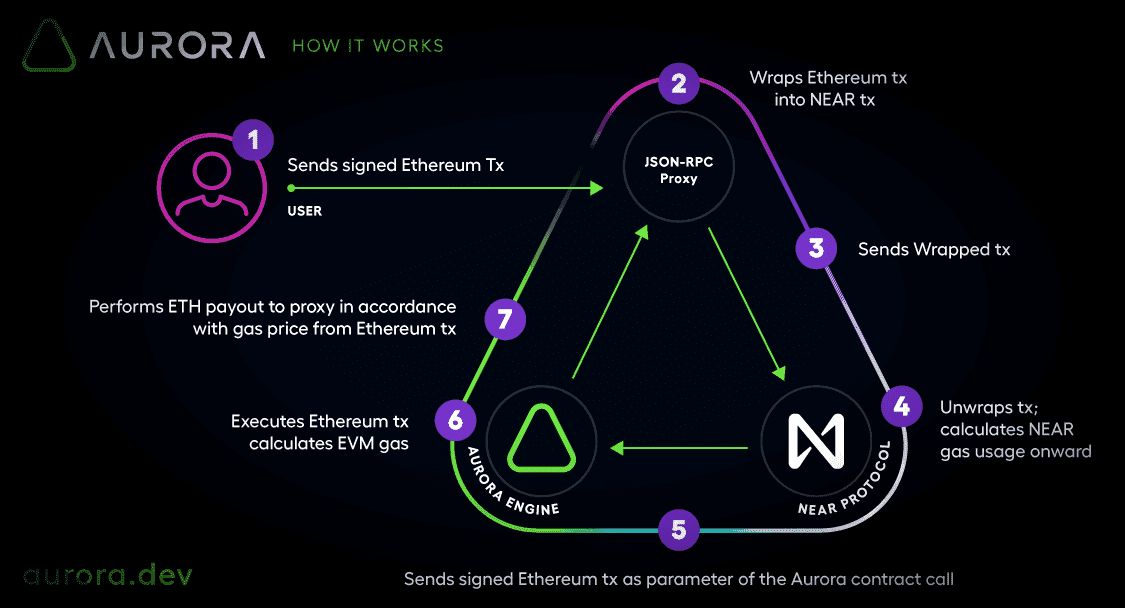
Aurora EVM is not a traditional Layer 2 rollup. It is a fully customizable, EVM-compatible chain that operates as a smart contract on the NEAR network. This architectural choice allows developers to deploy Ethereum-compatible applications with significantly lower transaction fees and higher throughput, without the complexity of bridging assets between separate ecosystems.
The core engine is a high-performance, pure Rust implementation of the Ethereum Virtual Machine. By running directly on NEAR, Aurora leverages NEAR’s sharding technology to scale horizontally. This means that as network activity grows, Aurora can expand its capacity to match, avoiding the congestion that often plagues standalone L1s or crowded L2s.
To visualize the underlying asset’s performance and market context, we track NEAR’s price action:
This setup creates what Aurora calls a "Virtual Chain." Instead of a separate blockchain, the chain logic exists within a single smart contract. This simplifies development and security, as developers can use familiar Ethereum tools like MetaMask and Hardhat while benefiting from NEAR’s speed and cost efficiency. It effectively bridges the gap between Ethereum’s developer ecosystem and NEAR’s scalability.
Virtual chains vs. traditional L2s
Most Layer 2 solutions are monolithic. They operate as single, shared environments where every application competes for the same block space and security guarantees. Aurora takes a different path with virtual chains. Instead of requiring developers to deploy to a generic, shared Layer 2, Aurora allows them to spin up their own fully customizable EVM-compatible chains that run as smart contracts on NEAR.
This architecture shifts the burden of consensus from the application layer to the underlying NEAR network. In a traditional L2 model, the chain itself must manage its own sequencer and security layer. In Aurora’s model, the "chain" is simply a piece of code executing on NEAR. This means developers get the scalability of a dedicated chain without the operational overhead of maintaining separate consensus mechanisms.
The trade-off is clear. Traditional L2s offer a unified ecosystem where liquidity and users are naturally pooled. Virtual chains offer isolation and customization. You can tune gas fees, set finality times, and design tokenomics specific to your project, but you are responsible for bootstrapping your own user base and liquidity. It is the difference between renting an apartment in a large building (traditional L2) and building your own custom home (Aurora virtual chain).
| Feature | Aurora Virtual Chains | Traditional L2s (e.g., Arbitrum, Optimism) |
|---|---|---|
| Architecture | Smart contracts on NEAR | Separate L2 chains with own sequencers |
| Customization | High (gas, finality, tokenomics) | Low (shared environment constraints) |
| Consensus | Secured by NEAR | Secured by L2-specific mechanisms |
| Liquidity | Fragmented per chain | Pooled within the L2 ecosystem |
| Deployment | Instant (no new chain launch) | Requires bridge and infrastructure setup |
This structure is particularly useful for projects that need predictable transaction costs or specific regulatory compliance that a shared L2 cannot guarantee. However, it requires a more hands-on approach to ecosystem growth. Developers must actively drive adoption to their specific virtual chain rather than relying on the network effects of a larger, existing L2.
Market position and ecosystem growth
Aurora occupies a distinct niche in the Layer 2 scaling landscape by functioning as a fully EVM-compatible environment built on the NEAR Protocol. Rather than competing directly with Ethereum mainnet or established L2s like Arbitrum and Optimism on pure throughput metrics, Aurora’s strategy centers on developer accessibility. It allows Ethereum developers to deploy Solidity smart contracts on NEAR with minimal friction, effectively bridging two separate ecosystems. This approach has attracted a steady stream of projects looking to leverage NEAR’s sharded infrastructure while maintaining compatibility with the broader Ethereum tooling.
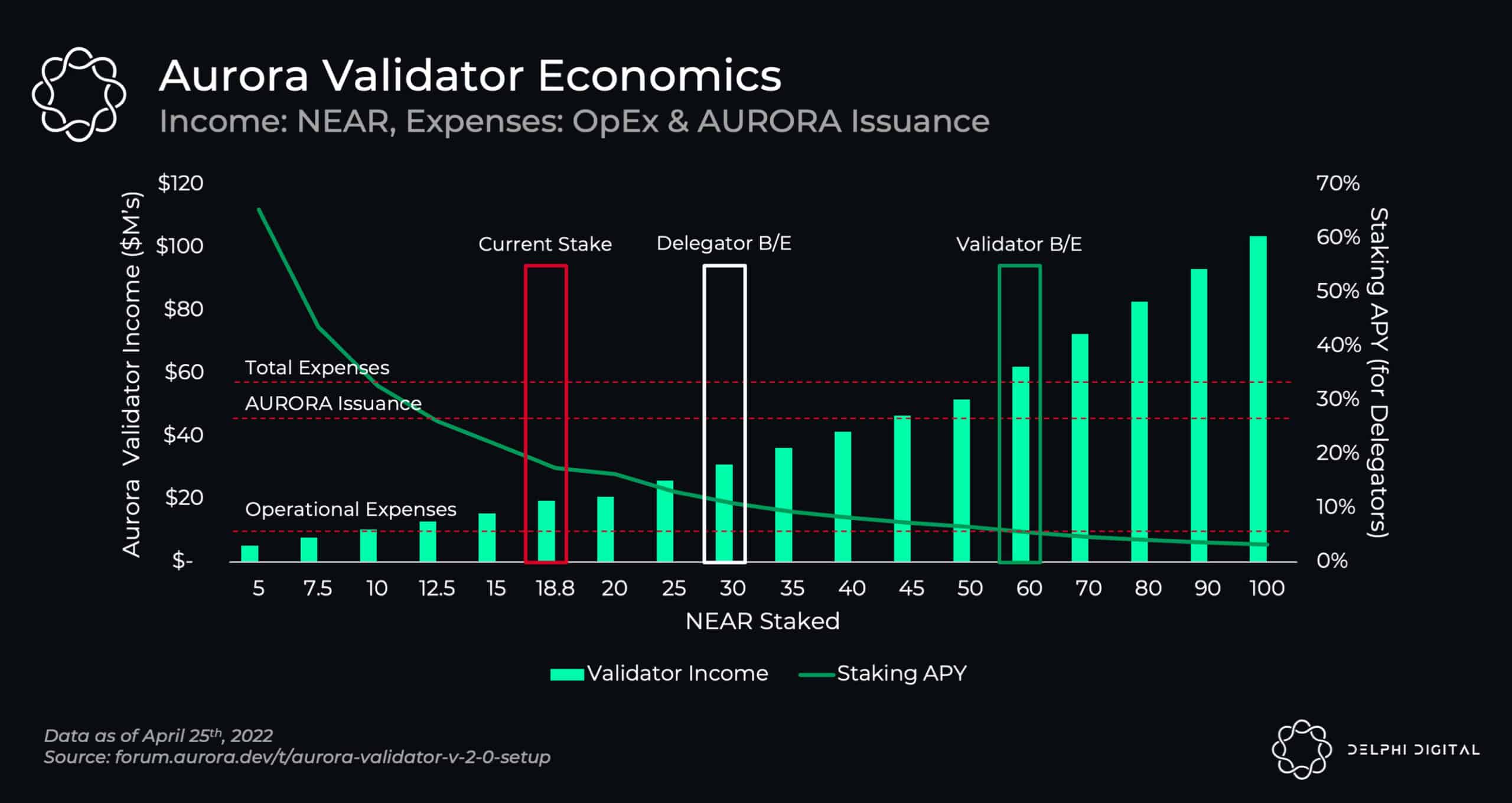
The ecosystem’s financial health is reflected in its Total Value Locked (TVL) trends and developer activity. While exact real-time figures fluctuate, Aurora has consistently ranked among the top L2s by TVL, often surpassing several major competitors. This capital efficiency stems from its low transaction costs and fast finality, which appeal to high-frequency DeFi applications and NFT marketplaces. The project’s ability to maintain a robust TVL despite intense market competition underscores the utility of its bridge mechanism between Ethereum and NEAR.
Developer adoption remains the critical metric for Aurora’s long-term viability. The platform has seen a rise in new contracts deployed, particularly from teams migrating from Ethereum due to gas fee volatility. GitHub activity and community engagement on NEAR’s forums indicate a growing base of builders who value the dual exposure to both Ethereum’s liquidity and NEAR’s scalability. As the broader crypto market matures, Aurora’s position as a pragmatic bridge for Ethereum-native code suggests it will remain a relevant player in the multi-chain future, provided it continues to attract and retain active developers.
Security Model and Bridge Risks
Aurora operates as a pure Rust implementation of the Ethereum Virtual Machine (EVM) on the NEAR Protocol. This architecture offers high performance and efficiency, but it introduces a specific set of infrastructure risks that investors must understand. The core of this risk lies in Aurora’s reliance on NEAR’s consensus mechanism. Aurora does not have its own independent validator set; instead, it depends entirely on NEAR’s finality. This means that if the NEAR network experiences a consensus failure or a significant security breach, Aurora’s state is equally vulnerable. There is no independent safety net.
The bridge connecting Ethereum liquidity to Aurora is another critical point of failure. While the system is designed for security, any cross-chain bridge represents a concentrated target for attackers. The smart contracts managing these bridged assets must be rigorously audited, and the underlying code—while written in secure Rust—still exists within a complex multi-chain environment. A vulnerability in the bridge logic could lead to the loss of locked assets, regardless of the underlying chain’s security.
Investors should view Aurora not just as an EVM layer, but as a dependent layer. Its value proposition is tied to NEAR’s success, but its risk profile is amplified by this dependency. The technical implementation is robust, but the systemic risk remains high. Always refer to the official Aurora documentation for the latest security audits and technical specifications before making any decisions.
Migration checklist for Ethereum developers
Moving an existing dApp to Aurora is less about rewriting code and more about verifying infrastructure compatibility. Because Aurora is a fully EVM-compatible network running on NEAR, your Solidity contracts should deploy without modification. The real work happens in the surrounding tooling and deployment pipelines.
Follow this sequence to validate your migration path using official resources.
Ensure your frontend and backend services can connect to Aurora’s mainnet RPC endpoints. Aurora supports standard Ethereum JSON-RPC methods, so most Web3.js or Ethers.js connections work out of the box. Test your read operations first to confirm block data and state access are functioning correctly.
Review your Solidity code for any opcodes or features that might behave differently on Aurora. While Aurora aims for full EVM equivalence, it is built on a pure Rust implementation. Check for any reliance on specific Ethereum mainnet state or external contracts that may not exist on the Aurora network.
Modify your hardhat, truffle, or forge configurations to target the Aurora network. You will need to update your provider URLs and network IDs. Ensure your wallet keys are properly configured for the NEAR ecosystem if you are using cross-chain bridges for asset transfers.
Before mainnet deployment, use the Aurora Block Explorer to verify transaction status and contract verification. This tool provides critical visibility into gas usage and transaction hashes, helping you debug any issues that arise during the initial deployment phase.
Frequently asked questions about Aurora
The name "Aurora" appears across several unrelated industries, from energy forecasting to weather modeling. This section clarifies the specific context of Aurora Crypto (AURORA) within the NEAR Protocol ecosystem.
No comments yet. Be the first to share your thoughts!