Aurora EVM architecture explained
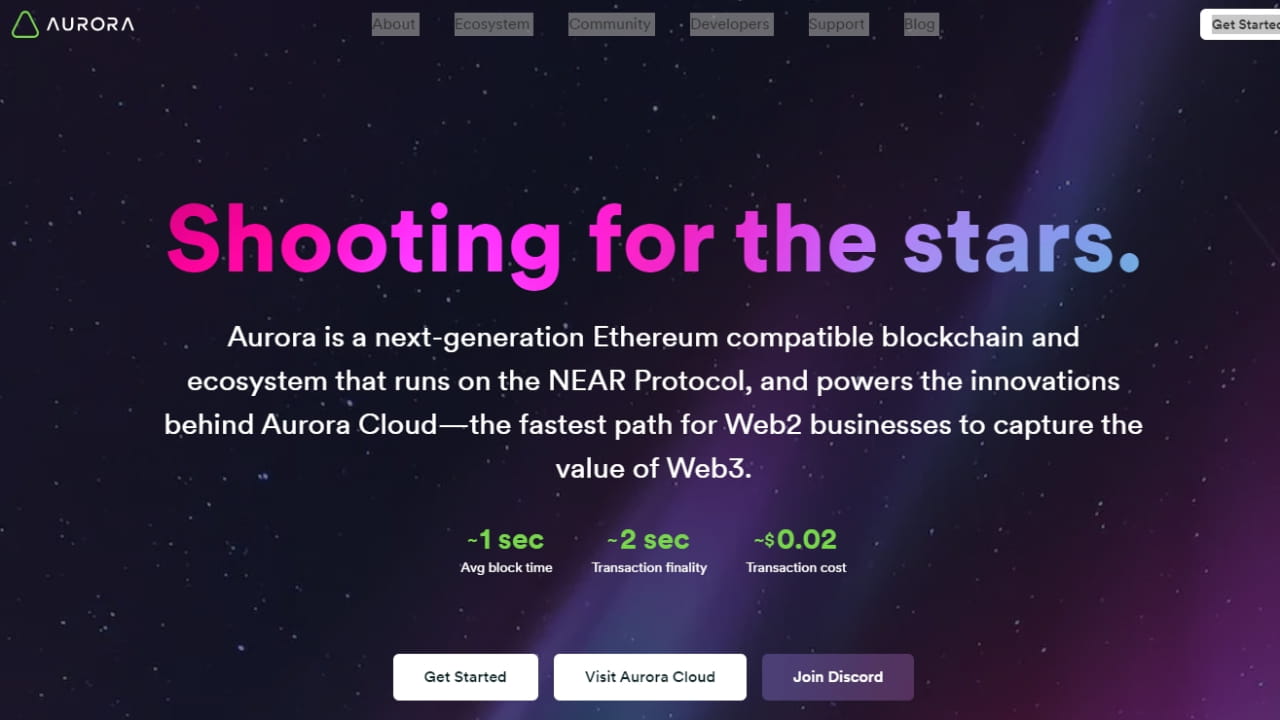
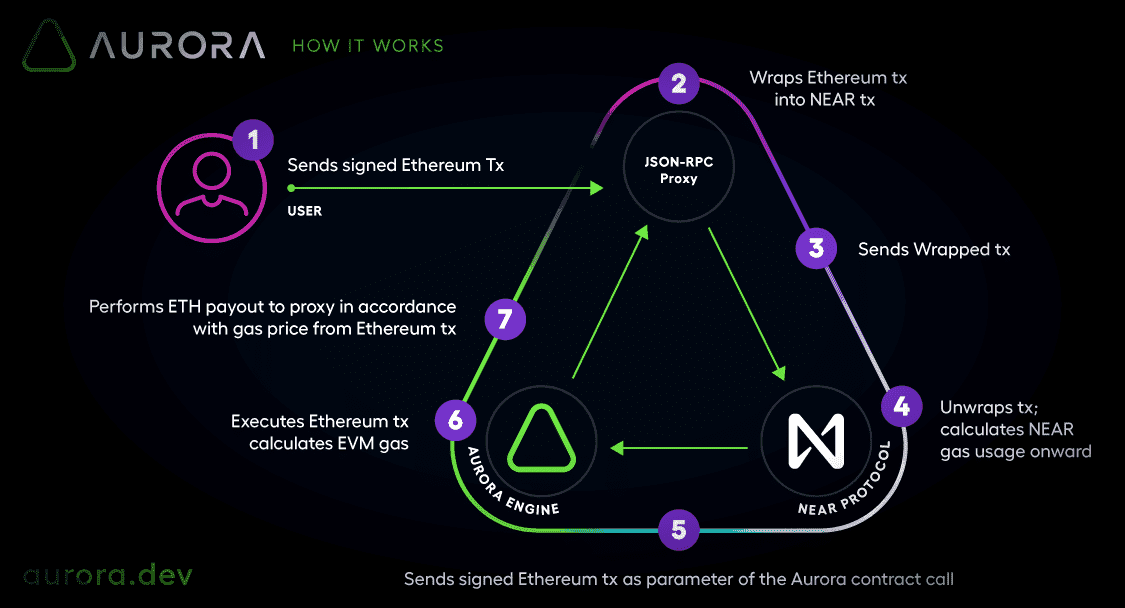
Aurora is not a standalone Layer 1 blockchain. It is a pure Rust implementation of the Ethereum Virtual Machine (EVM) that runs directly as a smart contract on the NEAR Protocol network. This architectural choice fundamentally changes how the network scales, allowing developers to deploy EVM-compatible chains without managing separate consensus mechanisms or validator sets.
By operating as a contract on NEAR, Aurora inherits the underlying network’s speed and finality. NEAR’s Nightshade sharding technology provides the throughput, while Aurora translates that capability into an EVM environment. This means Ethereum developers can use familiar tools like MetaMask, Hardhat, and Solidity without sacrificing the transaction speeds typically associated with high-performance Layer 1s.
The core engine, available on GitHub, is designed for security and efficiency. Instead of relying on bridge mechanisms that often introduce latency and security vulnerabilities, Aurora’s execution layer is native to NEAR. This direct integration allows for near-instant finality and significantly lower gas fees compared to Ethereum mainnet, creating a scalable infrastructure for virtual chains.
Virtual chains unlock NEAR’s sharding
Aurora isn’t just another Layer 2 sidechain; it is a smart contract running directly on NEAR Protocol. This architectural choice changes how the network scales. Instead of relying on external rollup sequencers or complex bridge mechanisms, Aurora leverages NEAR’s native sharding to process transactions in parallel.
This setup delivers three distinct technical advantages: low fees, high throughput, and native interoperability.
Low fees through shared security
Because Aurora shares NEAR’s security model, it avoids the overhead of maintaining a separate validator set. Transactions are validated by NEAR’s shard chains, which distributes the computational load. This results in gas fees that are a fraction of those on Ethereum mainnet, making micro-transactions and high-frequency trading economically viable.
High throughput via sharding
NEAR’s protocol uses dynamic sharding to adjust capacity based on demand. When network activity spikes, Aurora benefits from this elasticity. The EVM executes blocks concurrently with other shards on the network. This parallel processing allows Aurora to handle thousands of transactions per second without the congestion that typically bottlenecks standalone EVM chains.
Native interoperability
Running as a smart contract means Aurora can call other contracts on NEAR directly. This eliminates the need for slow, expensive cross-chain bridges for assets or data that reside on NEAR. Developers can build hybrid applications that combine Ethereum-compatible logic with NEAR’s high-speed storage and account model seamlessly.
Developer tools and ecosystem
Aurora’s architecture is built to feel familiar to Ethereum developers while leveraging NEAR’s underlying speed. The primary interface for this experience is Aurorascan, a block explorer that mirrors the functionality of Etherscan. It provides the essential data layer for monitoring transactions, verifying smart contracts, and analyzing network activity on the Aurora EVM.
For those building new applications, Aurora provides the necessary SDKs and libraries to interact with the network. The documentation offers clear guidance on setting up development environments, ensuring that the transition from writing code to deploying on-chain is straightforward. This includes support for standard Ethereum development tools, allowing teams to maintain their existing workflows.
Migrating existing Ethereum dApps is a common use case, and Aurora simplifies this process. The network provides specific migration guides and tools to help developers port their smart contracts and frontend interfaces. By maintaining EVM compatibility, Aurora reduces the friction typically associated with cross-chain development, allowing projects to scale without rewriting their core logic.
The following table compares Aurora’s performance metrics against Ethereum L1 and other NEAR-based solutions to illustrate the efficiency gains available to developers.
| Network | Avg. Gas Cost | Theoretical TPS |
|---|---|---|
| Aurora | Low | High |
| Ethereum L1 | High | Low |
| NEAR Sharding | Low | Very High |
Strategic opportunities for investors
Use this section to make the Aurora EVM Analysis decision easier to compare in real life, not just on paper. Start with the reader's actual constraint, then separate must-have requirements from details that are merely nice to have. A practical choice should survive normal use, maintenance, timing, and budget. If a recommendation only works in an ideal situation, call that out plainly and give the reader a fallback path.
The simplest way to use this section is to write down the must-have criteria first, then compare each option against those criteria before weighing nice-to-have features.
Essential tools for Aurora development
Building on Aurora requires a mix of standard Ethereum tooling and specific infrastructure that respects its virtual chain architecture. The ecosystem relies on a pure Rust implementation of the EVM, which allows for high performance while maintaining full compatibility with existing Ethereum developer workflows. You do not need to learn a new language; Solidity and standard EVM opcodes work exactly as they do on mainnet Ethereum.
The primary interface for interacting with the network is through standard RPC endpoints provided by Aurora.dev. These endpoints support the same JSON-RPC methods used by MetaMask, Hardhat, and Foundry. This means you can deploy your existing testnets and development environments to Aurora with minimal configuration changes, primarily by updating the network chain ID and RPC URL in your provider settings.
For security and key management, the ecosystem integrates with standard Web3 wallets that support EVM chains. However, because Aurora runs as a smart contract on NEAR, transaction finality can differ slightly from Ethereum's block production. Developers should account for this when building applications that require immediate confirmation feedback, often using NEAR's block explorer or Aurora-specific block explorers to verify state changes.
To streamline the development process, several frameworks have added native support for Aurora. Tools like Hardhat and Foundry can be configured to deploy contracts directly to Aurora's virtual chains. This allows developers to run local tests and then push to mainnet without rewriting deployment scripts. The goal is to lower the barrier to entry for Ethereum developers who want to leverage Aurora's scalability without managing separate infrastructure stacks.


As an Amazon Associate, we may earn from qualifying purchases.
Frequently asked questions about Aurora
What happened to Aurora Crypto today?
Aurora’s price action is closely tied to broader market movements and NEAR Protocol ecosystem updates. As of today, the token has seen modest gains, with 1 AURORA currently costing approximately £0.018, representing a +0.62% change in the last hour and +0.73% over 24 hours. For real-time price tracking and live charting, use the widget below.
How high can Aurora Crypto go?
Predicting exact price ceilings is speculative, but Aurora’s potential is largely driven by its role as a leading EVM-compatible layer on NEAR. If adoption of its scaling tools and developer infrastructure grows, demand for the AURORA token could increase. Long-term value depends on successful deployment of its architecture and sustained network activity rather than short-term hype.
Is Aurora a good investment for beginners?
Aurora is an infrastructure play rather than a consumer-facing app, which may present a steeper learning curve for beginners. It offers exposure to NEAR’s sharding technology and EVM compatibility, but carries higher volatility than established layer-1 networks. Beginners should focus on understanding its technical utility and official documentation at aurora.dev before considering allocation.
What is Aurora’s main use case?
Aurora provides an EVM-compatible environment on the NEAR Protocol, allowing developers to deploy Ethereum smart contracts with lower fees and higher throughput. Its primary use case is enabling scalable decentralized applications (dApps) without sacrificing Ethereum compatibility, bridging the gap between EVM developers and NEAR’s high-performance blockchain.
No comments yet. Be the first to share your thoughts!