Aurora EVM infrastructure overview
Aurora operates as a fully EVM-compatible network built directly on the NEAR Protocol. Unlike traditional Layer 2 solutions that rely on separate rollup chains or optimistic verification windows, Aurora functions as a "virtual chain." This architecture allows Ethereum smart contracts to run natively on NEAR’s shard-based infrastructure, merging Ethereum’s developer ecosystem with NEAR’s high throughput and low transaction costs.
The core distinction lies in how Aurora handles state and execution. Instead of posting data to an L2 chain and waiting for fraud proofs or validity proofs to settle on Ethereum, Aurora executes transactions as smart contracts on NEAR. This means developers can deploy standard Solidity code without modification, while users benefit from near-instant finality and negligible gas fees. The result is a scaling solution that feels like Ethereum but performs like a high-speed application chain.
This structure positions Aurora as a critical bridge for Ethereum developers seeking scalability without the complexity of managing separate consensus layers. By leveraging NEAR’s Nightshade sharding, Aurora can process thousands of transactions per second, making it viable for high-frequency DeFi applications and consumer-facing dApps that require immediate confirmation. As we analyze the Aurora EVM market research, understanding this underlying infrastructure is essential for evaluating its competitive moat against other scaling options.
Virtual chains and scalability mechanics
Use this section to make the Aurora EVM Market Research decision easier to compare in real life, not just on paper. Start with the reader's actual constraint, then separate must-have requirements from details that are merely nice to have. A practical choice should survive normal use, maintenance, timing, and budget. If a recommendation only works in an ideal situation, call that out plainly and give the reader a fallback path.
The simplest way to use this section is to write down the must-have criteria first, then compare each option against those criteria before weighing nice-to-have features.
Tokenomics and market dynamics
The AURORA token serves as the backbone for Aurora’s governance and staking mechanisms, but its value proposition is tightly coupled to network activity and the broader growth of the NEAR ecosystem. Understanding how this token functions is essential for anyone conducting Aurora EVM market research, as it dictates both the utility and the speculative pressure on the asset.
Aurora operates as a fully decentralized EVM on NEAR, meaning AURORA holders play a direct role in securing the network through proof-of-stake. Staking AURORA not only earns yields but also influences protocol upgrades and fee structures. This creates a feedback loop: higher usage drives demand for block space, which increases staking rewards and governance participation, theoretically supporting the token’s floor price. However, this model relies heavily on sustained developer activity and user adoption within the NEAR ecosystem.
To contextualize Aurora’s position, it helps to compare its core metrics against other Ethereum Layer 2 solutions. While Aurora offers competitive transaction speeds and low fees, its market capitalization and total value locked (TVL) often lag behind more established L2s like Arbitrum or Optimism. This disparity highlights the challenges of scaling an EVM environment that is not natively built into Ethereum’s base layer.
| Metric | Aurora | Arbitrum | Optimism |
|---|---|---|---|
| Consensus | Proof-of-Stake (NEAR) | Optimistic Rollup | Optimistic Rollup |
| Finality | ~1-2 minutes | ~7 days (challenge period) | ~7 days (challenge period) |
| EVM Compatibility | Full EVM | Full EVM | Full EVM |
| Native Token Utility | Governance & Staking | Governance (ARB) | Governance (OP) |
The table above illustrates a key structural difference: Aurora’s finality is significantly faster than traditional optimistic rollups because it leverages NEAR’s near-instant finality. This is a tangible advantage for high-frequency applications, though it comes with the trade-off of relying on NEAR’s security model rather than Ethereum’s base layer security.
As shown in the live price widget and chart, AURORA’s market price fluctuates in tandem with broader crypto market sentiment and NEAR’s performance. Investors should note that while the token’s utility is clear, its market dynamics are heavily influenced by liquidity conditions and the success of NEAR’s ecosystem expansion. For thorough Aurora EVM market research, tracking both on-chain activity metrics and token staking ratios will provide a more accurate picture of long-term viability than price action alone.
Essential tools for Aurora builders
Building on Aurora means leveraging the full weight of the Ethereum ecosystem while running on NEAR's high-throughput infrastructure. For developers, this translates to a familiar tooling environment with minimal friction. You can use standard Ethereum libraries like Hardhat, Foundry, and Web3.js without modification, but you must point them to Aurora's RPC endpoints to interact with the network. The official Aurora documentation provides the necessary endpoint configurations and chain IDs to get started quickly.
The foundation of this stack is the Aurora SDK and the Bridge. The bridge allows you to move ETH and ERC-20 tokens between Ethereum and Aurora. While the bridge is critical for liquidity, the real value for builders lies in the virtual machine (VM) implementation. Aurora runs as a smart contract on NEAR, meaning every transaction is secured by NEAR's proof-of-stake validators. This architecture allows for sub-second finality and near-zero gas fees, which is essential for applications requiring high transaction volumes.
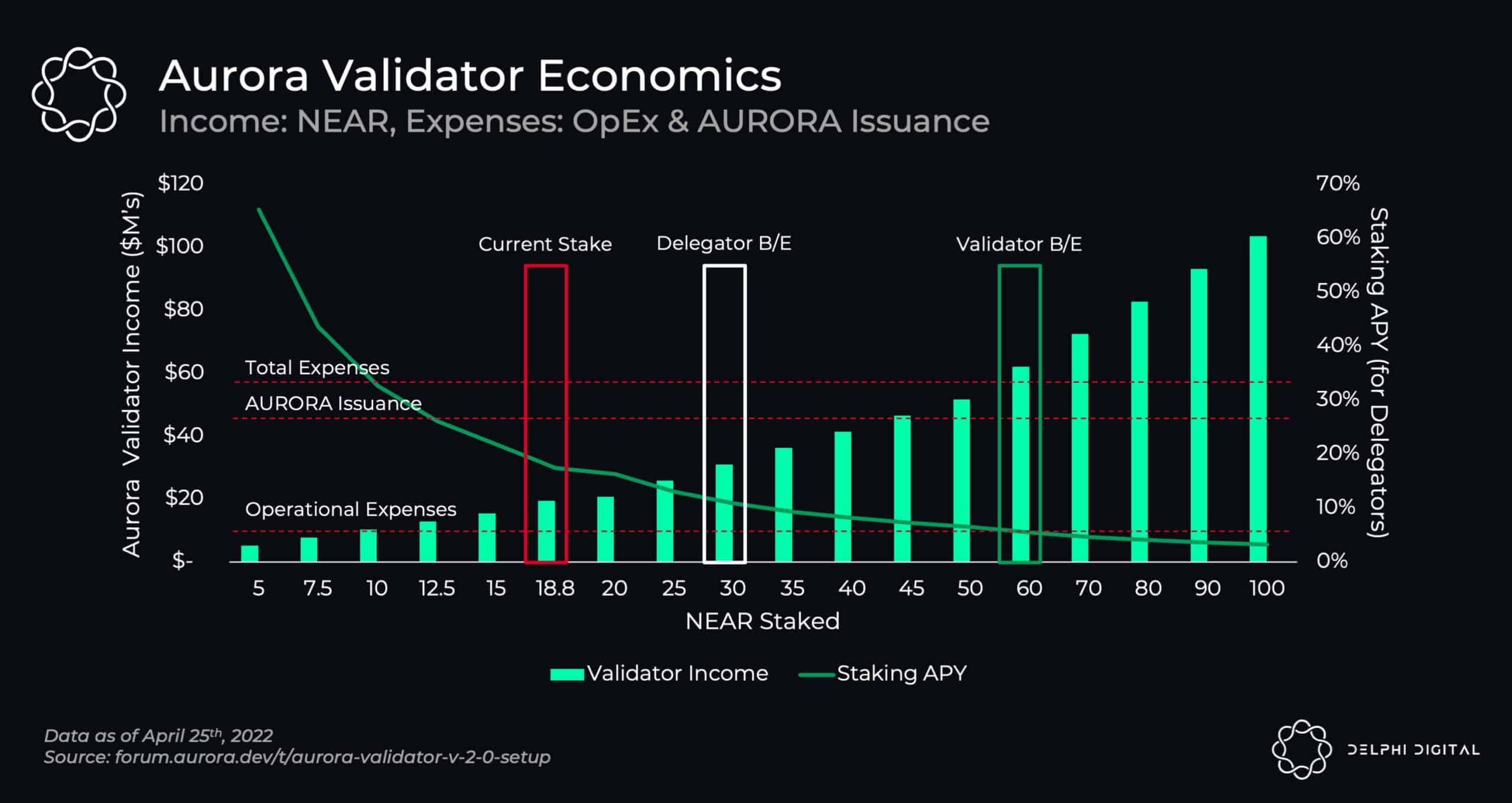
For infrastructure, Aurora offers robust RPC providers and indexer services. These tools help you track on-chain events and manage state efficiently. When deploying, ensure you are using the correct network ID and gas limit parameters, as these differ from mainnet Ethereum. The following image illustrates the underlying architecture that makes this possible.
For those interested in the physical hardware often used in Web3 development, such as hardware wallets for secure key management, relevant tools are available below.


As an Amazon Associate, we may earn from qualifying purchases.
Strategic Outlook and Risk Factors
Aurora’s position in the EVM scaling landscape hinges on its unique architecture: an EVM implementation running as a smart contract on the NEAR L1. This design offers low fees and high throughput, but it also introduces specific technical dependencies that differentiate Aurora from standalone Layer 2 rollups or competing EVM chains. For market research purposes, understanding this distinction is vital for assessing long-term viability.
The competitive pressure in the EVM space is intensifying. While Aurora benefits from NEAR’s sharding capabilities, it must contend with established Layer 2 solutions like Arbitrum and Optimism, as well as emerging chains like Base. Adoption challenges remain significant, particularly in attracting high-value DeFi liquidity and enterprise-grade developers who may prefer more mature ecosystems. The token’s market performance reflects this uncertainty, with price action often mirroring broader crypto sentiment rather than fundamental protocol growth alone.
Technical risk is another critical factor. Because Aurora is a smart contract on NEAR, its security and finality are tied to the underlying NEAR consensus mechanism. Any vulnerability in the bridge mechanism or the Aurora contract itself could pose systemic risks. Investors and developers should monitor NEAR’s network health closely, as Aurora’s stability is inextricably linked to its host chain.
Evaluating Aurora requires a balanced view of its infrastructure advantages against these market and technical headwinds. The potential for growth exists, but it is contingent on sustained adoption and the continued evolution of the NEAR ecosystem. For now, Aurora remains a niche but technically interesting player in the broader EVM market.
Frequently asked questions about Aurora
What happened to Aurora Crypto today?
Aurora (AURORA) is currently trading around £0.020, reflecting a slight 24-hour decline of -1.49% despite minor hourly gains. The token remains sensitive to broader market volatility, with its EVM-based infrastructure on NEAR serving as a foundational support level for current valuation.
Are Aurora NFTs a good investment?
Aurora’s role as an Ethereum-compatible solution on the NEAR blockchain offers distinct advantages for NFT developers, particularly regarding low transaction fees and high throughput. However, investment viability depends heavily on ecosystem adoption and sustained market conditions rather than infrastructure alone.
How does Aurora EVM compare to other L2s?
Aurora distinguishes itself by operating as a true EVM on NEAR, allowing seamless deployment of Solidity-based smart contracts without wrapping. This approach contrasts with some Layer-2 solutions that require complex bridging or non-standard EVM implementations, potentially lowering the barrier for Ethereum developers.
Where can I track Aurora price data?
For real-time market analysis, official sources like aurora.dev provide technical documentation, while aggregators like CoinGecko offer live price charts and trading volume data. These resources are essential for monitoring the token’s performance against its market cap and daily trading activity.
No comments yet. Be the first to share your thoughts!