Aurora EVM Analysis
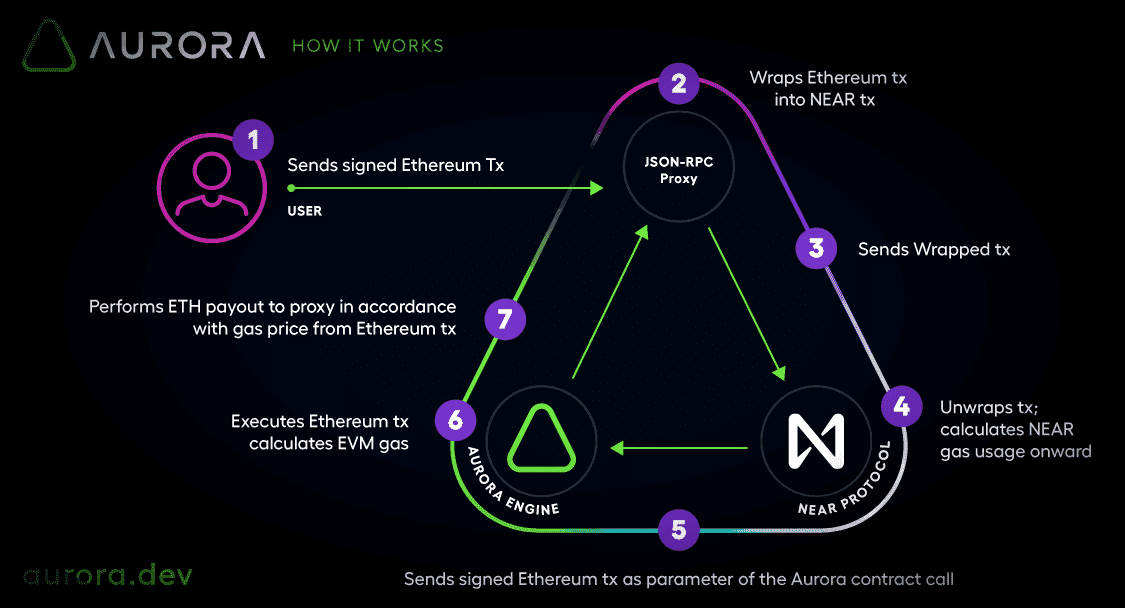
Aurora operates as an EVM-compatible layer on the NEAR Protocol, designed to bring Ethereum’s smart contract environment to a high-throughput network. For developers and users, this means writing Solidity code that executes on Aurora while relying on NEAR’s sharding for speed and lower transaction costs. The architecture functions as a bridge, allowing ERC-20 tokens and other assets to move between Ethereum and NEAR via the Rainbow Bridge.
The core value proposition lies in infrastructure efficiency. By utilizing NEAR’s Nightshade sharding, Aurora processes transactions significantly faster than the Ethereum mainnet. This performance is critical for applications requiring frequent state changes, such as decentralized exchanges or gaming platforms. The Aurora EVM analysis reveals that the trade-off for this speed is a reliance on NEAR’s consensus mechanism, which differs from Ethereum’s Proof-of-Stake validator set.
From a market research perspective, Aurora sits among the top EVM-compatible chains, including BNB Smart Chain and Polygon. Its position is defined not by standalone token dominance, but by its role as a scaling solution. The ecosystem benefits from NEAR’s growing decentralization efforts, which aim to reduce centralization risks associated with early-stage scaling layers. Developers should evaluate Aurora based on its integration depth with existing Ethereum tooling and the liquidity available on its native bridges.
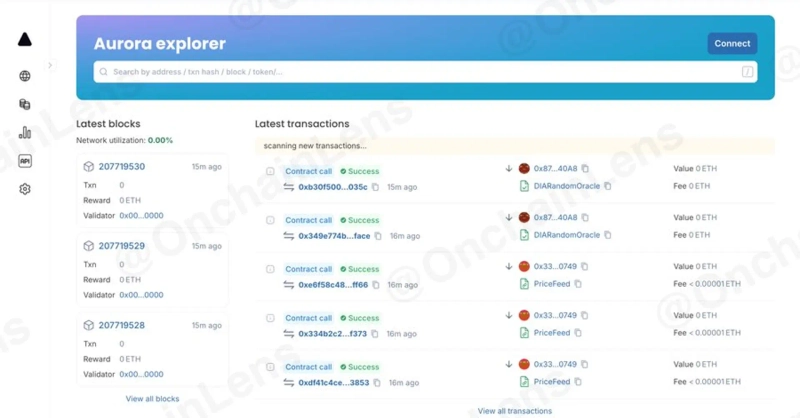
The technical infrastructure supports a wide range of dApps, from DeFi protocols to NFT marketplaces. Tools like Aurorascan provide Etherscan-like functionality, offering transparency into transaction history and smart contract verification. This familiarity lowers the barrier to entry for Ethereum developers migrating to NEAR. As the Web3 landscape evolves, Aurora’s ability to maintain EVM compatibility while leveraging NEAR’s scalability will remain a key factor in its adoption by strategic developers.
Aurora EVM analysis: tradeoffs and infrastructure choices
Choosing Aurora means selecting a specific architecture for scaling Ethereum applications. It is not a standalone blockchain but an EVM-compatible layer built on the NEAR Protocol. This structure offers distinct advantages for developers seeking low costs and high throughput, but it introduces specific technical dependencies you must evaluate before deployment.
The primary tradeoff lies in the relationship between Ethereum compatibility and NEAR’s underlying infrastructure. Aurora allows you to deploy Solidity smart contracts that interact with the Ethereum ecosystem while leveraging NEAR’s sharded architecture for speed. This means your dApp benefits from Ethereum’s security model and developer tooling but relies on NEAR’s consensus mechanism for finality. If your project requires deep integration with Ethereum Layer 2 ecosystems like Arbitrum or Optimism, this cross-chain dependency adds complexity to your bridge and liquidity strategies.
Transaction costs and speed are the most immediate benefits. Aurora processes blocks roughly every 1.7 seconds, significantly faster than Ethereum’s base layer. Gas fees are typically a fraction of a cent, making it viable for high-frequency applications like gaming or micro-transactions that would be prohibitively expensive on Ethereum mainnet. However, this speed comes with the tradeoff of different network dynamics. Because Aurora uses ETH as the base fee token but settles on NEAR, you must manage cross-chain liquidity carefully to ensure smooth user experiences during peak congestion.
To help visualize how Aurora compares to other scaling solutions, the table below breaks down key infrastructure metrics. This comparison highlights where Aurora fits in the broader EVM landscape, particularly regarding block time and fee structures.
| Chain | Block Time | Base Fee Token | Security Model |
|---|---|---|---|
| Aurora | ~1.7s | ETH | NEAR Sharding |
| Ethereum Mainnet | ~12s | ETH | Proof-of-Stake |
| Arbitrum One | ~0.25s | ETH | Optimistic Rollup |
| Polygon PoS | ~2s | MATIC | Proof-of-Stake |
Market performance is another critical factor for long-term viability. While technical specs define the developer experience, token economics and market liquidity determine the project’s resilience. Aurora’s native token, AURORA, serves governance and staking roles, but its price action is influenced by both NEAR’s ecosystem health and broader Ethereum trends. Monitoring real-time data helps assess whether the current market sentiment supports your project’s tokenomics or liquidity needs.
For deeper technical analysis, examining the price chart alongside network activity can reveal correlations between developer adoption and market value. A provider-backed chart allows you to track volatility and volume trends, ensuring you time your mainnet launch or liquidity provision strategically rather than reacting to short-term noise.
Choose the next step
Aurora’s infrastructure upgrades position it as a high-throughput EVM environment, but selecting the right tools requires matching specific developer needs to platform capabilities. The decision framework below prioritizes practical checks over abstract comparisons.
Confirm that your existing Solidity smart contracts compile without modification on Aurora’s EVM implementation. Check for compatibility with Aurora’s specific gas pricing model and transaction finality times, which differ from Ethereum mainnet. Verify that your deployment scripts support the NEAR blockchain’s account structure.
Aurorascan provides Etherscan-like functionality, but you must verify that your preferred IDE plugins and debugging tools integrate smoothly. Test the Rainbow Bridge for asset transfers between Ethereum and NEAR, as bridge latency and fees directly impact user experience. Ensure your CI/CD pipelines can handle Aurora-specific testnet deployments.
Aurora competes with BNB Smart Chain, Avalanche, and Polygon. Evaluate these chains based on your specific use case: liquidity depth for DeFi, NFT marketplace activity, or low-cost data storage. Aurora’s unique advantage lies in its NEAR integration, which offers distinct scalability benefits if your project aligns with that ecosystem.

Review Aurora’s recent decentralization efforts and validator set composition. Check for any reported outages or security incidents in the past 12 months. Ensure your risk tolerance aligns with the current state of NEAR’s sharding technology, which underpins Aurora’s performance.



As an Amazon Associate, we may earn from qualifying purchases.
The choice ultimately depends on whether your project benefits from Aurora’s specific NEAR integration or if a more established EVM chain better serves your user base. Use the steps above to filter options based on concrete technical requirements rather than market hype.
Spotting Weak Options and Misleading Claims
Aurora’s 2026 infrastructure upgrades promise speed, but the marketing often obscures the tradeoffs. While NEAR’s sharding provides a unique backend, Aurora remains an EVM layer. This distinction matters more than the hype. Developers assuming Aurora is a standalone L1 will face integration surprises. The platform’s reliance on NEAR’s consensus means downtime or network congestion on NEAR directly impacts Aurora’s availability. It is not a silver bullet for scalability.
Many guides claim Aurora is "the same as Ethereum." This is technically false and practically dangerous. The EVM runtime is compatible, but transaction finality, gas token economics, and bridge security models differ. Migrating a Solidity contract requires testing for these nuances. Ignoring them leads to failed deployments or lost funds. Always verify the specific version of the EVM implementation Aurora uses for your target chain.
Avoid tools that promise "one-click migration" without explaining the Rainbow Bridge mechanics. The bridge is a critical vulnerability point. If a tool glosses over cross-chain asset risks, it is likely masking weak security practices. Stick to official documentation and audited bridge interfaces. The market is noisy; clarity is your best defense.
No comments yet. Be the first to share your thoughts!