What Aurora EVM Infrastructure Actually Is
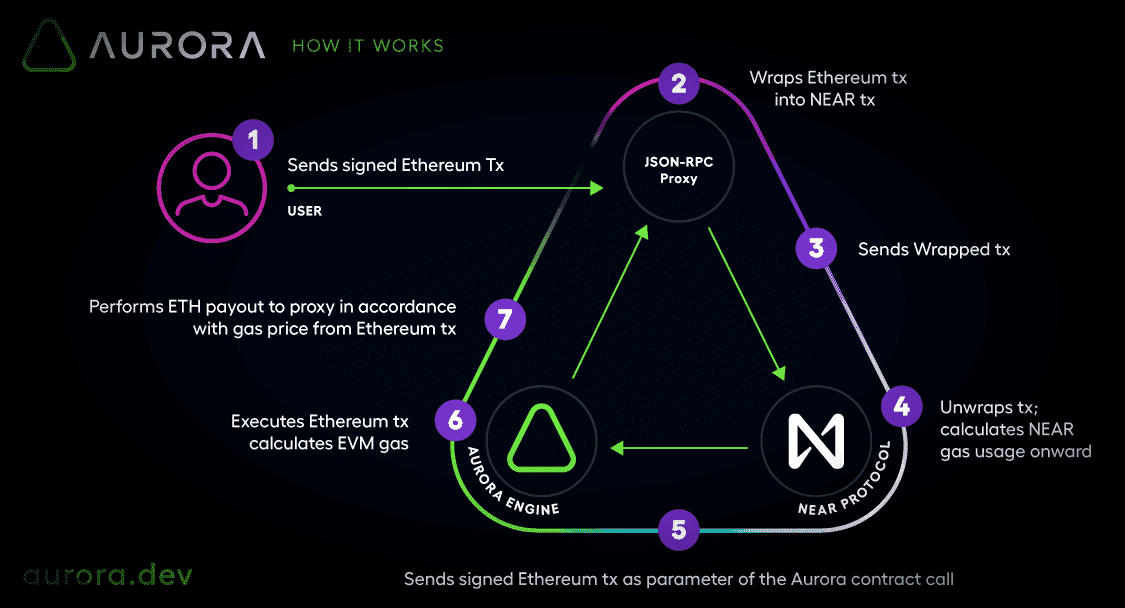
Aurora is not a standalone blockchain. It is an EVM-compatible Layer 2 that runs directly as a smart contract on the NEAR Protocol. This architectural choice defines everything about how Aurora operates, scales, and secures transactions.
Instead of building a new consensus layer from scratch, Aurora leverages NEAR’s existing infrastructure. This means developers get Ethereum Virtual Machine (EVM) compatibility without the overhead of maintaining separate validator sets or bridging assets through complex, multi-step processes. The network functions as a "virtual chain," offering the same developer experience as Ethereum but with significantly higher throughput and lower costs.
The core of this infrastructure is the Aurora Engine, a high-performance EVM implementation, paired with the Aurora Bridge for trustless asset transfers between Ethereum and NEAR. For builders, this means you can deploy familiar Solidity contracts and use standard tools like MetaMask and Hardhat, but you benefit from NEAR’s sharding technology. This combination allows Aurora to handle a much higher volume of transactions per second, making it a practical choice for high-frequency DeFi applications and gaming dApps that would be too expensive on L1 Ethereum.
By viewing Aurora as a virtual chain rather than a separate network, you can better understand its scaling strategy. It doesn't compete with NEAR; it extends Ethereum’s reach. This approach simplifies the developer journey: write once for EVM, deploy on Aurora, and tap into NEAR’s scalability instantly.
Virtual Chains: Custom EVMs Without the L1 Overhead
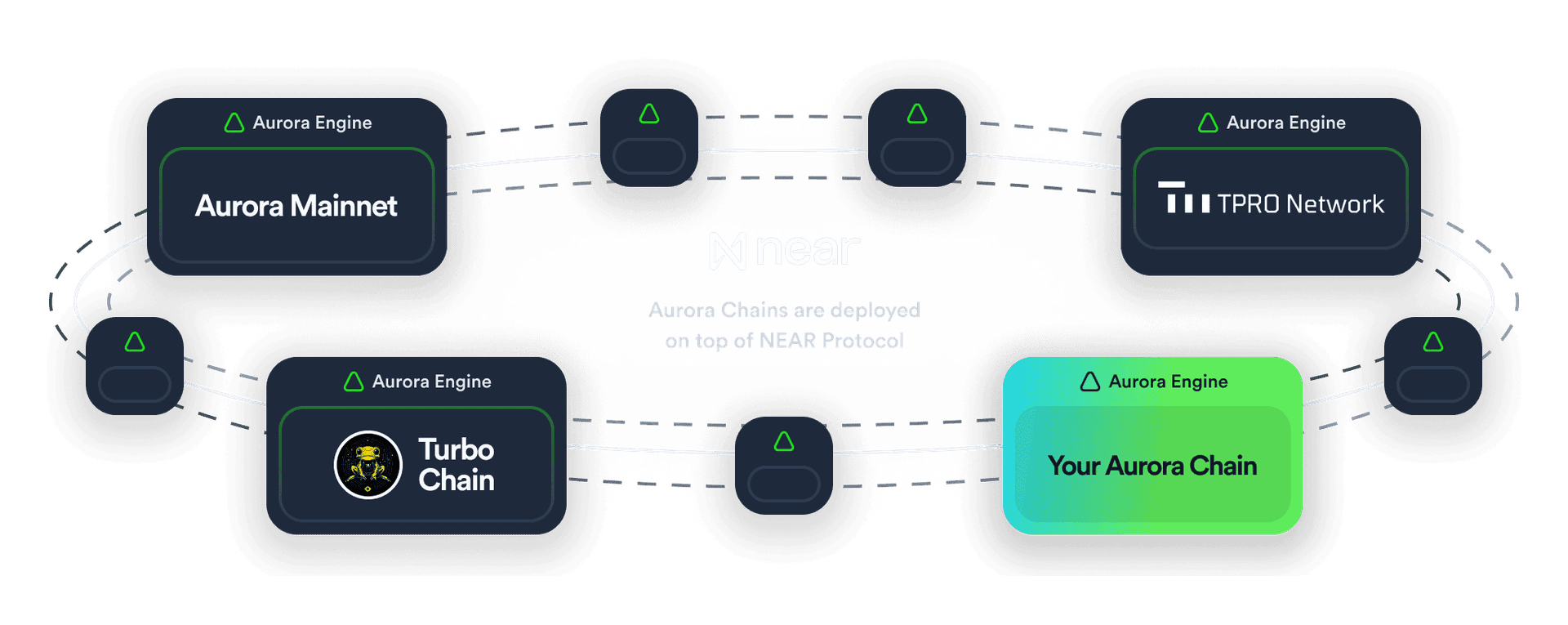
Aurora’s core architecture distinguishes itself through Virtual Chains. These are not separate Layer 1 blockchains requiring independent validator sets and security models. Instead, Virtual Chains are fully customizable, EVM-compatible environments that operate as smart contracts on the NEAR Protocol.
This architecture allows developers to deploy isolated EVM environments with specific configurations—such as tailored gas limits, custom precompiles, or specialized consensus parameters—without the massive operational overhead of launching a new L1. You inherit NEAR’s high throughput and low costs while maintaining the Ethereum tooling developers already know.
By treating each Virtual Chain as a contract rather than a standalone network, Aurora enables a modular approach to scalability. Developers can spin up dedicated environments for specific applications, gaming ecosystems, or enterprise solutions, all while sharing the same underlying infrastructure. This reduces fragmentation and simplifies cross-chain interoperability within the Aurora ecosystem.
This model aligns with Aurora’s vision of becoming a network of Virtual Chains, offering the flexibility of Layer 1 customization with the security and scalability of a Layer 2 solution. For builders, this means faster time-to-market and lower operational costs, as the heavy lifting of consensus and data availability is handled by NEAR.
Essential Tools for Aurora Development
Building on Aurora means leveraging a stack designed for speed and low cost. Because Aurora runs as a virtual chain on NEAR Protocol, you get Ethereum compatibility without the Ethereum congestion. This architecture allows you to deploy smart contracts using standard Solidity tooling while benefiting from near-instant finality and minimal gas fees.
To start, you need reliable infrastructure. Aurora provides public RPC endpoints, but for production apps, consider using dedicated providers like QuickNode or running your own validator node. These connections ensure your dApp stays online during high traffic. For bridging assets, the official Aurora Bridge allows seamless transfers between Ethereum and Aurora. You can also use third-party bridges like Stargate for cross-chain liquidity, though sticking to official bridges reduces counterparty risk.
Development workflows are streamlined by existing EVM tools. Remix IDE, Hardhat, and Foundry all work out of the box with Aurora’s RPC URL. You don’t need to learn a new language or framework. The only difference is the network configuration in your project settings. This means you can migrate existing Ethereum projects to Aurora with minimal code changes, focusing instead on optimizing for lower gas costs.
The choice between standard Aurora and Aurora Virtual Chains depends on your needs. Standard Aurora is a shared environment, ideal for general-purpose dApps. Virtual Chains, however, let you spin up isolated, customizable chains for specific use cases like gaming or enterprise solutions. They inherit NEAR’s security but offer unique tokenomics and governance. This flexibility makes Aurora a strong candidate for builders who want scalability without sacrificing control.
| Feature | Standard Aurora | Virtual Chains |
|---|---|---|
| Finality | ~1 second | ~1 second |
| Customization | Limited | High |
| Tokenomics | Shared AURORA | Customizable |
| Use Case | General dApps | Niche/Enterprise |
Scaling High-Throughput Apps with Aurora Virtual Chains
Aurora’s architecture solves the congestion problems that plague generic EVM deployments by leveraging Virtual Chains. These are isolated, EVM-compatible environments running on the NEAR Protocol. For builders targeting high-throughput use cases like gaming or social apps, this setup provides a dedicated chain for your app without the noise of unrelated network traffic. You get Ethereum-compatible smart contracts with NEAR-level scalability and finality.
Turbo Chains for Gaming and Social
Aurora offers Turbo Chains, a specialized variant of Virtual Chains designed for applications requiring maximum throughput and minimal latency. If you are building a game or a real-time social feed, standard EVM blockchains often bottleneck under load. Turbo Chains allow you to spin up a chain optimized for your specific transaction volume. This means your users experience instant interactions rather than waiting for block confirmations in a crowded network.
Gas Abstraction for Better UX
High-frequency apps cannot rely on users managing gas tokens for every interaction. Aurora supports gas abstraction, allowing developers to sponsor transaction fees or integrate gasless payment methods. This removes the friction of wallet funding for end-users. You can pay for user transactions in stablecoins or fiat, keeping the experience smooth and invisible to the player or social user.
Pre-Launch Infrastructure Checklist
Before deploying a high-throughput app, ensure your infrastructure is ready for scale. Use this checklist to verify your setup:
-
RPC Stability: Configure redundant RPC endpoints to handle burst traffic without downtime.
-
Bridge Liquidity: Ensure sufficient liquidity on the Aurora Bridge for fast user onboarding and offboarding.
-
NEAR Account Setup: Verify your NEAR account is funded and configured for proper transaction signing and validator interaction.
Recommended Development Tools
To build and scale your Aurora Virtual Chain effectively, consider using these essential tools and resources available to Web3 builders.



As an Amazon Associate, we may earn from qualifying purchases.
Frequently Asked Questions About Aurora
What is the Aurora network?
Aurora is a Layer 2 blockchain solution built on the NEAR Protocol that provides Ethereum Virtual Machine (EVM) compatibility with enhanced scalability. It allows developers to deploy Solidity smart contracts that run natively on NEAR, combining the best of both ecosystems.
What is the Aurora network vs. Aurora Blockchain?
It is critical to distinguish between the blockchain infrastructure and the telecommunications company. Aurora Blockchain is the EVM-compatible Layer 2 we are discussing. Aurora Networks, however, is a separate entity that provides access network solutions for global service providers. They are unrelated in terms of technology or operations.
Why is Aurora Crypto going up?
Price movements are driven by market sentiment and utility adoption. Key factors include lower transaction fees, simpler smart contract execution, and increased interest from Ethereum developers migrating to NEAR’s ecosystem. While the token has faced volatility, its potential to attract more users to the NEAR network remains a primary growth driver.
No comments yet. Be the first to share your thoughts!