Aurora’s place in the NEAR ecosystem
Aurora is not a separate blockchain running in isolation. It is a Layer 2 solution built directly on the NEAR Protocol, designed to bring Ethereum Virtual Machine (EVM) compatibility to NEAR’s high-speed infrastructure. This architecture allows developers to deploy existing Ethereum smart contracts and dApps on NEAR without rewriting code, effectively bridging two major ecosystems.
The defining feature of Aurora is its "Virtual Chain" architecture. Unlike traditional rollups that bundle transactions off-chain and post compressed data to a main chain, Aurora operates as a smart contract deployed on NEAR. This means the entire EVM state resides within a single NEAR account. This distinction simplifies the technical stack significantly, removing the need for complex data availability layers or sequencers that are typical in other Layer 2 models.
This approach offers distinct advantages for scalability and cost. By leveraging NEAR’s sharding technology, Aurora can process transactions at NEAR’s native speed, resulting in near-instant finality and significantly lower gas fees compared to Ethereum mainnet. For developers, this means they can tap into NEAR’s growing liquidity and user base while maintaining the familiar EVM development environment.
The Rust Engine Behind Aurora
Aurora isn’t just a bridge; it is a native implementation of the Ethereum Virtual Machine (EVM) built entirely in Rust. This architectural choice is deliberate. By writing the core EVM logic from scratch rather than wrapping existing libraries, Aurora achieves a level of performance and security that is difficult to replicate with standard porting methods. The result is a high-throughput environment that feels familiar to Ethereum developers but operates with significantly lower latency and cost.
This pure Rust foundation allows Aurora to integrate tightly with NEAR’s underlying infrastructure. It inherits NEAR’s Nightshade sharding mechanism, which dynamically allocates resources based on network load. This means Aurora doesn’t compete with other chains for block space; it shares the same shard as NEAR, scaling automatically as the ecosystem grows. The consensus layer also benefits from NEAR’s asynchronous proof-of-stake model, ensuring finality is reached quickly without sacrificing decentralization.
For developers, this means the EVM implementation supports standard Solidity contracts out of the box. There is no need to rewrite logic for a non-EVM chain. However, the underlying Rust codebase is optimized for NEAR’s specific block structure, allowing for faster transaction processing. This synergy between the EVM layer and NEAR’s consensus is what enables Aurora to handle complex DeFi interactions with ease.
Virtual Chains and developer customization
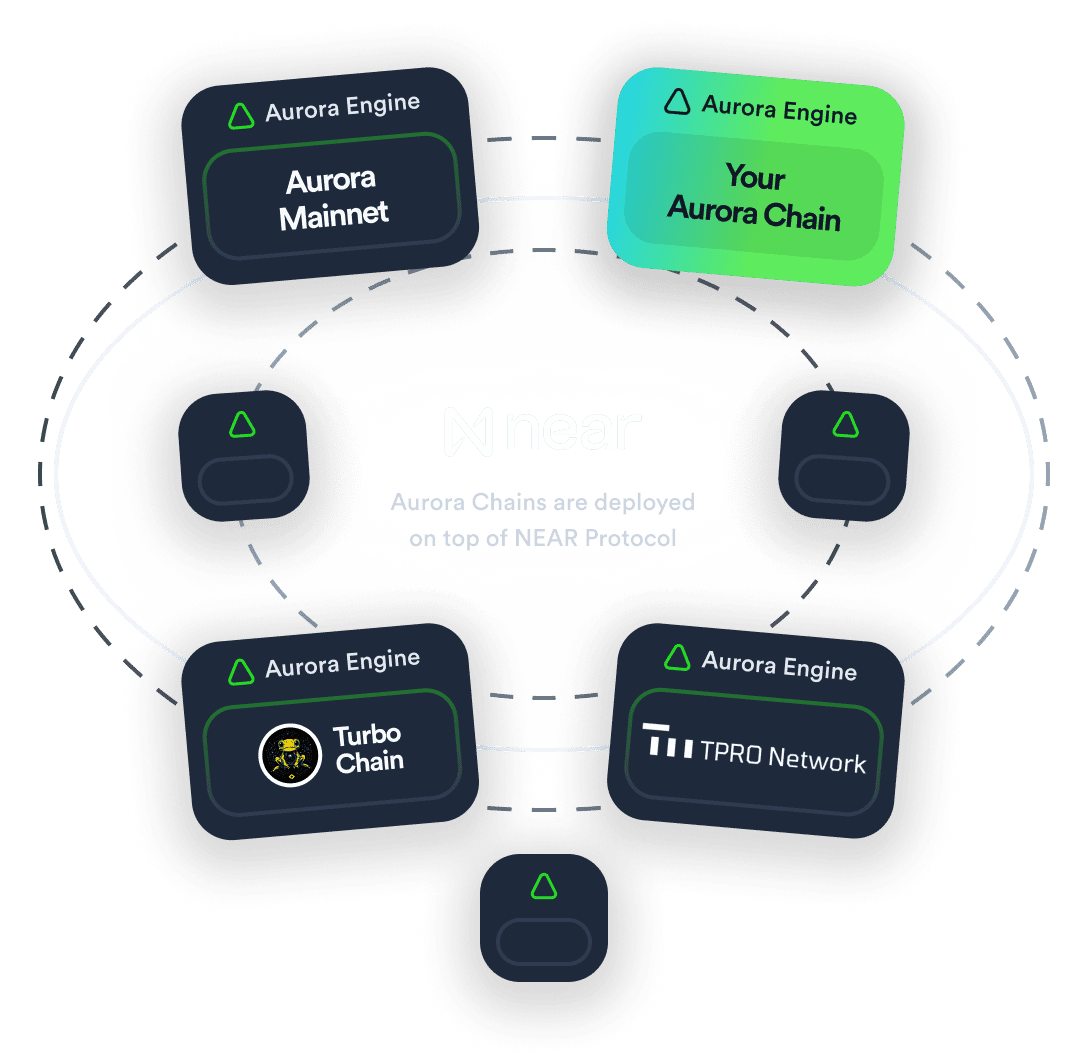
Aurora operates as a "Network of Virtual Chains," a structure that allows developers to deploy fully customizable, EVM-compatible blockchains that run as smart contracts on NEAR. Instead of building isolated silos, these virtual chains inherit NEAR’s security, scalability, and infrastructure. This approach offers the flexibility of a dedicated L2 while leveraging the shared liquidity and security of the main NEAR protocol.
Developers can tailor each chain to specific needs, adjusting gas parameters, block times, and consensus mechanisms. This customization is critical for applications requiring high throughput or unique economic models. By treating virtual chains as composable building blocks, Aurora enables a modular ecosystem where specialized chains can interoperate seamlessly.
The table below compares the standard Aurora chain with Aurora Cloud Turbo Chains, highlighting the differences in flexibility and security models.
| Feature | Standard Aurora | Aurora Cloud Turbo |
|---|---|---|
| Customization | EVM-compatible defaults | Full parameter control |
| Security Model | Shared NEAR security | Shared NEAR security |
| Deployment Speed | Standard deployment | Optimized for production |
| Cost Efficiency | Low gas fees | Ultra-low gas fees |
This modularity transforms Aurora from a single L2 into a scalable platform. Developers are no longer constrained by a one-size-fits-all architecture. They can spin up chains that fit their exact use case, from high-frequency trading platforms to gaming ecosystems, all while maintaining the robust security foundation of NEAR.
Market positioning and competitive landscape
Aurora occupies a distinct niche in the EVM Layer 2 ecosystem by functioning as a smart contract on the NEAR Protocol rather than a standalone chain. This architecture allows it to inherit NEAR’s sharding capabilities while maintaining full compatibility with Ethereum tooling. The result is a hybrid environment that offers significantly lower transaction costs and enhanced scalability without forcing developers to abandon the Ethereum standard.
When compared to traditional rollups, Aurora’s value proposition centers on its shared security model and cross-chain liquidity. While competitors often require complex bridging mechanisms to connect ecosystems, Aurora’s position as an EVM chain on an L1 simplifies the developer experience. This approach appeals to projects seeking Ethereum-level security guarantees with the throughput of a modern L1.
To understand Aurora’s current market standing, it is essential to look at live performance metrics. The following chart provides a technical view of the broader market context, helping to contextualize Aurora’s activity against general Ethereum trends.
Aurora’s strategy positions it not as a replacement for Ethereum, but as a scalable extension. By leveraging NEAR’s infrastructure, it avoids the fragmentation issues that often plague isolated L2s. This makes it a compelling option for applications that require high throughput and low fees while remaining firmly within the Ethereum developer ecosystem.
Deploying on Aurora: A Developer’s Checklist
Integrating with Aurora EVM infrastructure requires configuring your environment to interact with NEAR’s sharded architecture while maintaining standard Ethereum tooling compatibility. The process moves from local setup to mainnet deployment, ensuring your smart contracts inherit NEAR’s scalability without sacrificing developer familiarity.
Install the Aurora CLI or configure your existing Ethereum tooling (Hardhat, Foundry, or Truffle) to point to Aurora’s RPC endpoints. You must add Aurora’s chain ID and currency symbol (NEAR) to your wallet configuration to ensure accurate gas estimation and transaction signing.
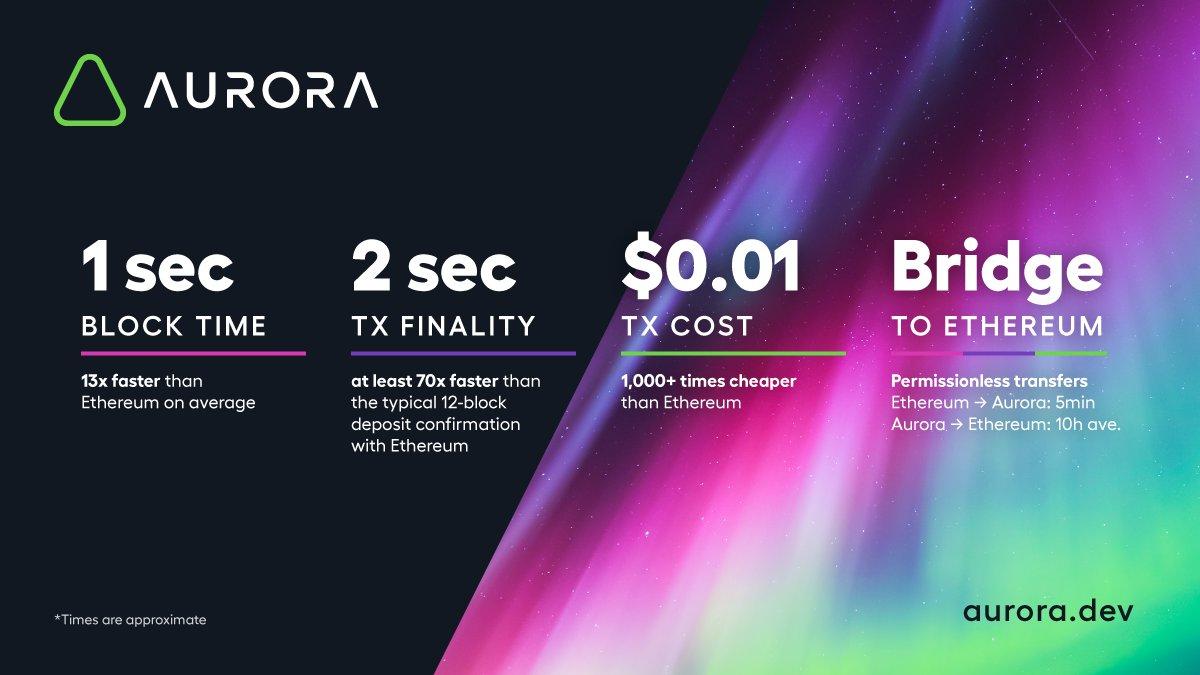
Use the official Aurora Bridge to transfer ETH or ERC-20 tokens from Ethereum Mainnet or other supported chains. This step locks assets on the source chain and mints their Aurora equivalents, providing the liquidity needed for gas fees and contract interactions on the virtual chain.
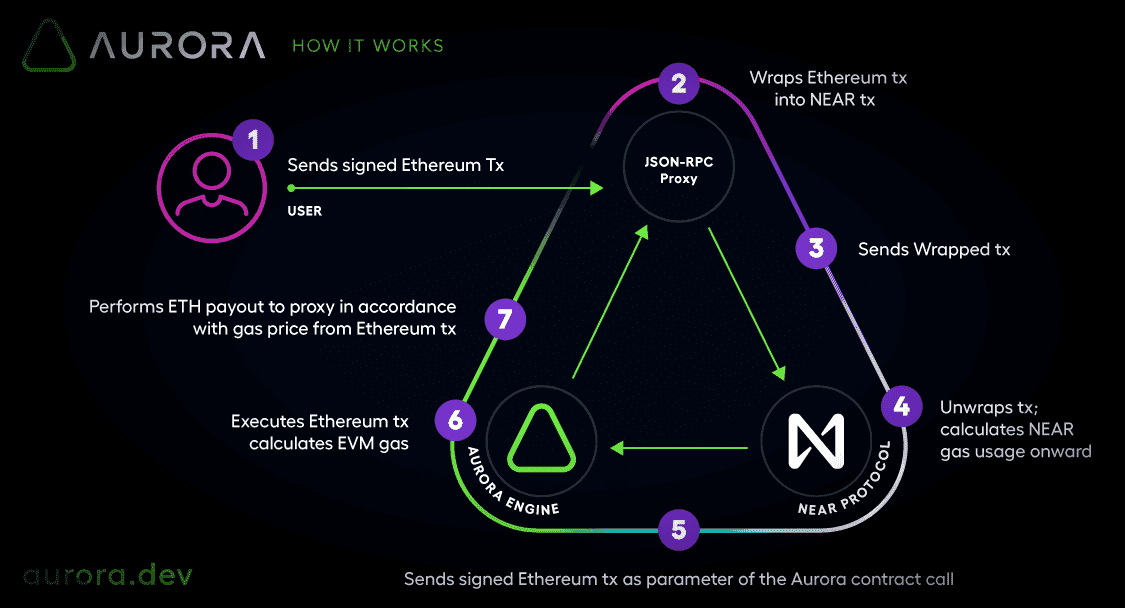
Compile and deploy your Solidity contracts using standard deployment scripts. Aurora’s EVM compatibility allows you to use familiar tools like Remix or Hardhat directly. Ensure your contracts are optimized for NEAR’s transaction finality, which differs slightly from Ethereum’s block confirmation times.
After deployment, verify your contract source code on the Aurora Explorer. This step is critical for trust, as it allows users and auditors to read the contract code directly. Verification also enables interaction through the explorer’s built-in interface for testing functions and viewing state changes.
Common questions about Aurora Blockchain
Aurora is a Layer 2 blockchain solution built on the NEAR Protocol that provides Ethereum Virtual Machine (EVM) compatibility with enhanced scalability and significantly lower transaction costs.
Aurora ecosystem.
A universal trading protocol powering one-click cross-chain swaps and unified liquidity for onchain markets and tokenized assets.
No comments yet. Be the first to share your thoughts!