Aurora EVM market context
Aurora EVM infrastructure operates as a high-performance Layer 2 solution built directly on the NEAR Protocol. By leveraging NEAR’s sharding architecture, Aurora delivers Ethereum Virtual Machine (EVM) compatibility without the congestion and high fees that often plague the Ethereum mainnet. This positioning allows developers to deploy existing Solidity smart contracts with minimal friction while accessing significantly lower transaction costs and faster finality times.
The network’s core innovation lies in its virtual chains. Rather than relying on a single monolithic chain, Aurora enables fully customizable, EVM-compatible chains that run as smart contracts on NEAR. This architecture provides developers with the scalability and speed needed for complex applications, from high-frequency DeFi protocols to scalable gaming ecosystems. These virtual chains offer a modular approach to blockchain development, allowing teams to tailor consensus and state management to their specific needs.
Cross-chain interoperability is another defining feature of Aurora’s infrastructure. The network facilitates seamless asset movement between Ethereum and NEAR, bridging two of the most significant ecosystems in the crypto space. This connectivity not only expands the liquidity pool available to Aurora-based applications but also enhances the utility of digital assets across networks. As the demand for scalable EVM environments grows, Aurora’s unique blend of NEAR’s performance and Ethereum compatibility positions it as a critical piece of the broader blockchain infrastructure landscape.
How Aurora’s Virtual Chain Architecture Works
Aurora’s infrastructure operates as a smart contract deployed on the NEAR Protocol, effectively creating a Layer 2 environment that is fully compatible with the Ethereum Virtual Machine (EVM). Rather than building a new, isolated blockchain from scratch, Aurora leverages NEAR’s sharding technology to execute EVM transactions. This approach allows developers to deploy existing Ethereum smart contracts and tools without modification, while benefiting from NEAR’s high throughput and low transaction fees.
The core of this architecture is a pure Rust implementation of the EVM, which replaces the original Go-based client to optimize for performance and security. By running as a contract on NEAR, Aurora inherits the network’s security model and scalability. This means that the virtual chains built on Aurora are not just fast; they are deeply integrated into the underlying consensus and data availability layers of the host chain. The result is a system that can process thousands of transactions per second, making it suitable for high-frequency applications like DeFi and gaming.
This virtual chain model enables a unique form of composability. Applications built on Aurora can interact with NEAR’s native assets and protocols, bridging the gap between the Ethereum ecosystem and the NEAR network. For users, this means access to Ethereum’s vast library of dApps with the speed and cost efficiency of a modern Layer 2 solution. The architecture is designed to be modular, allowing for the creation of specialized virtual chains that can be customized for specific use cases while maintaining the security guarantees of the NEAR mainnet.
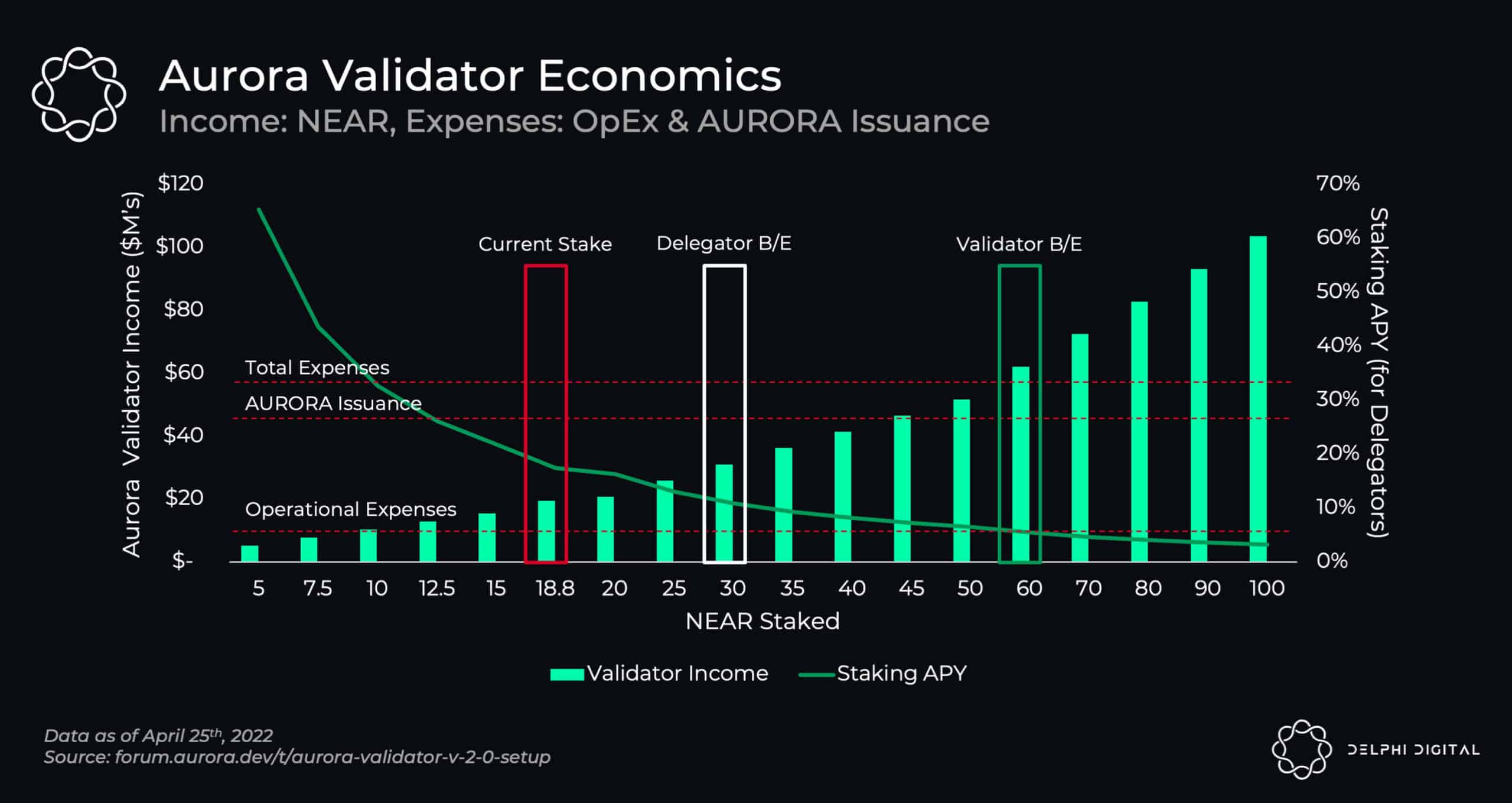
Technical Architecture and Performance
The technical foundation of Aurora is built on a high-performance, pure Rust implementation of the EVM. This choice of language was deliberate, aimed at maximizing efficiency and security while maintaining full compatibility with Ethereum standards. The Rust-based EVM client, available on GitHub, is designed to handle the demands of a high-throughput network, ensuring that transaction processing is both fast and reliable. This implementation is a significant departure from the original Go-based client, offering better memory safety and concurrency handling.
Aurora’s architecture is designed to be modular and extensible. Developers can create virtual chains that inherit the full security, scalability, and infrastructure of the NEAR Protocol. These chains are not just isolated instances of the EVM; they are deeply integrated with NEAR’s sharding mechanism. This integration allows for parallel processing of transactions, which is key to achieving the high throughput that Aurora is known for. The result is a system that can scale horizontally, adding more capacity as demand increases.
The virtual chain model also enables a level of customization that is difficult to achieve on traditional Layer 2 solutions. Developers can tailor the consensus and execution layers to fit their specific needs, while still benefiting from the security and decentralization of the NEAR network. This flexibility is particularly valuable for applications that require high performance and low latency, such as real-time gaming or high-frequency trading. By decoupling the execution layer from the consensus layer, Aurora provides a robust platform for building the next generation of decentralized applications.
Aurora and NEAR protocol integration
Aurora operates as an Ethereum Virtual Machine (EVM) layer built directly on top of the NEAR Protocol. This architecture allows Ethereum smart contracts to execute on NEAR’s sharded infrastructure without requiring developers to rewrite code or migrate assets to a new virtual machine. The result is a hybrid environment where Ethereum’s vast ecosystem of tooling meets NEAR’s high-throughput consensus.
The integration relies on a shared security model. Aurora blocks are finalized through NEAR’s Nightshade sharding mechanism, which provides 1–2 second finality and significantly lower transaction costs compared to Ethereum mainnet. While Aurora maintains its own governance and operational independence, its security is anchored to NEAR’s validator set. This means that the reliability of Aurora transactions is directly tied to the health and decentralization of the underlying NEAR network.
Asset mobility between the two chains is facilitated by the Rainbow Bridge. This trustless bridge allows users to lock assets on Ethereum and mint wrapped equivalents on Aurora, or vice versa. It enables seamless capital flow between the two ecosystems, ensuring that liquidity on Aurora is not isolated but rather an extension of Ethereum’s broader market. This connectivity is critical for maintaining deep liquidity pools and supporting complex DeFi interactions that require access to both networks.
Deploying dApps on Aurora EVM Infrastructure
Developers can deploy to Aurora using the same tooling that powers Ethereum. Because Aurora is an EVM-compatible Layer 2 on NEAR, your existing Solidity contracts, Hardhat configurations, and Ethers.js scripts work out of the box. The primary adjustment is switching your RPC endpoint to Aurora’s mainnet or testnet URL. This allows you to leverage Ethereum’s mature developer ecosystem while accessing NEAR’s high throughput and lower transaction costs.
1. Configure your development environment
Update your project’s .env file to point to an Aurora RPC provider. You can use public endpoints or integrate with services like QuickNode or Infura for better reliability. Ensure your chainId is set to 1313161554 for mainnet or 1313161555 for testnet. Most modern frameworks like Hardhat, Foundry, and Truffle automatically detect these chain IDs, so no complex custom network definitions are needed.
2. Compile and deploy your contracts
Once your environment is configured, deploy your contracts exactly as you would on Ethereum. Use npx hardhat run scripts/deploy.js --network aurora to push your code to the chain. The deployment process is identical to Ethereum mainnet, but the gas fees are significantly lower, often costing a fraction of a cent. This low-cost environment is ideal for testing edge cases and deploying frequent updates without the financial friction of Ethereum L1.
3. Verify and interact with your dApp
After deployment, verify your contract source code on Aurora’s block explorer, Snowtrace. This step is critical for transparency and allows frontend interfaces to interact with your contracts via ABI. Connect your frontend to the Aurora RPC using Ethers.js or Web3.js, and your dApp will be live on the Aurora EVM infrastructure.
Update your .env file with Aurora’s RPC URL and set the chain ID to 1313161554 (mainnet) or 1313161555 (testnet). Ensure your Hardhat or Foundry config includes this network definition.
Run your standard deployment scripts against the Aurora network. The process mirrors Ethereum, but you benefit from NEAR’s scalability and lower gas fees.
Verify your contract source code on Snowtrace to enable frontend interaction via ABI. Connect your dApp’s frontend to the Aurora RPC to complete the deployment.
Infrastructure roadmap and NFT strategy
Aurora is advancing its infrastructure to bridge the gap between Ethereum security and NEAR’s scalability. The immediate focus is on deepening cross-chain functionality, specifically for non-fungible tokens. The protocol plans to enable NFTs to move seamlessly between the NEAR and Ethereum networks, a feature that significantly expands their utility and accessibility for users on both sides of the bridge.
Beyond asset interoperability, the roadmap prioritizes continued decentralization. As Aurora evolves from its origins within the NEAR core team, the architecture is shifting toward a more distributed validator set. This structural change is essential for long-term resilience, ensuring the EVM infrastructure remains robust and independent as it captures market share in the Layer 2 space.
Common questions about Aurora EVM infrastructure
How does Aurora achieve EVM compatibility on NEAR?
Aurora achieves EVM compatibility by running a pure Rust implementation of the Ethereum Virtual Machine as a smart contract on the NEAR Protocol. This architecture allows Ethereum-style transactions to execute on NEAR’s sharded infrastructure, inheriting NEAR’s security and scalability while maintaining full compatibility with Ethereum tooling and standards.
What is the role of the Rainbow Bridge in Aurora’s ecosystem?
The Rainbow Bridge facilitates trustless asset transfers between Ethereum and Aurora. It allows users to lock assets on Ethereum and mint wrapped equivalents on Aurora, or vice versa, ensuring seamless capital flow and deep liquidity integration between the two ecosystems.
What are the current limitations or risks of using Aurora?
While Aurora offers significant performance benefits, it relies on NEAR’s security model. Users should be aware that smart contract vulnerabilities on Aurora are mitigated by NEAR’s validator set, but the platform’s governance and operational independence mean that protocol upgrades or changes could impact user experience. Additionally, cross-chain bridge security is a critical consideration for any cross-chain infrastructure.
No comments yet. Be the first to share your thoughts!