What is Aurora EVM Infrastructure?
Aurora EVM infrastructure operates as a Layer 2 solution built on the NEAR Protocol, designed to bring Ethereum compatibility to a high-speed, low-cost environment. Rather than being a standalone blockchain, Aurora functions as a "Virtual Chain." This means the entire Ethereum Virtual Machine (EVM) runs as a smart contract directly on the NEAR network. This architectural choice allows developers to deploy existing Ethereum applications with minimal changes while leveraging NEAR's sharded infrastructure for superior throughput.
The core of this infrastructure is the Aurora Engine, a high-performance EVM implementation, supported by the Aurora Bridge for trustless asset transfers between Ethereum and NEAR. By decoupling the execution layer from the base settlement layer, Aurora solves the scalability trilemma that has long plagued Ethereum. Transactions are processed rapidly and cheaply, yet they inherit the security guarantees of the underlying NEAR protocol.
For builders, this setup means access to the vast Ethereum developer ecosystem without the congestion and exorbitant gas fees of the mainnet. It serves as a robust foundation for DeFi protocols, NFT marketplaces, and gaming applications that require high transaction volumes. Understanding this Virtual Chain model is essential for anyone evaluating Aurora's role in the broader blockchain landscape.
How Aurora Engine Runs as a NEAR Smart Contract
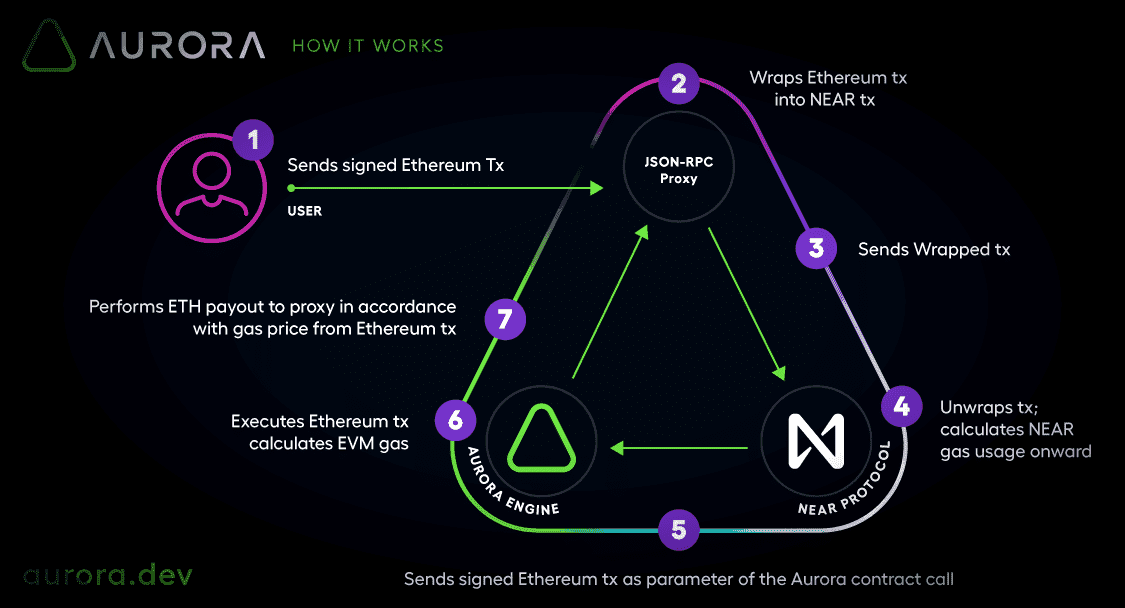
Aurora Engine is not a standalone blockchain. It is a smart contract deployed on the NEAR Protocol. This architecture turns Aurora into a "virtual chain," allowing it to function as an Ethereum Virtual Machine (EVM) environment while leveraging NEAR’s underlying infrastructure. By running as a contract, Aurora inherits NEAR’s sharding and finality, creating a hybrid model that bridges Ethereum compatibility with high throughput.
This setup is the core of Aurora EVM infrastructure. Developers write Solidity code exactly as they would for Ethereum, but the execution happens on NEAR. This means transactions are processed faster and cost significantly less. The virtual chain abstraction allows Aurora to scale horizontally, adapting to network loads without the congestion often seen on Layer 1 Ethereum networks.
The security model is equally distinct. Because Aurora is a contract on NEAR, it relies on NEAR’s proof-of-stake consensus and economic security. This reduces the risk of long-range attacks and provides faster finality times. For builders, this means deploying to Aurora EVM infrastructure offers the familiarity of Ethereum with the performance benefits of a modern, sharded Layer 1.
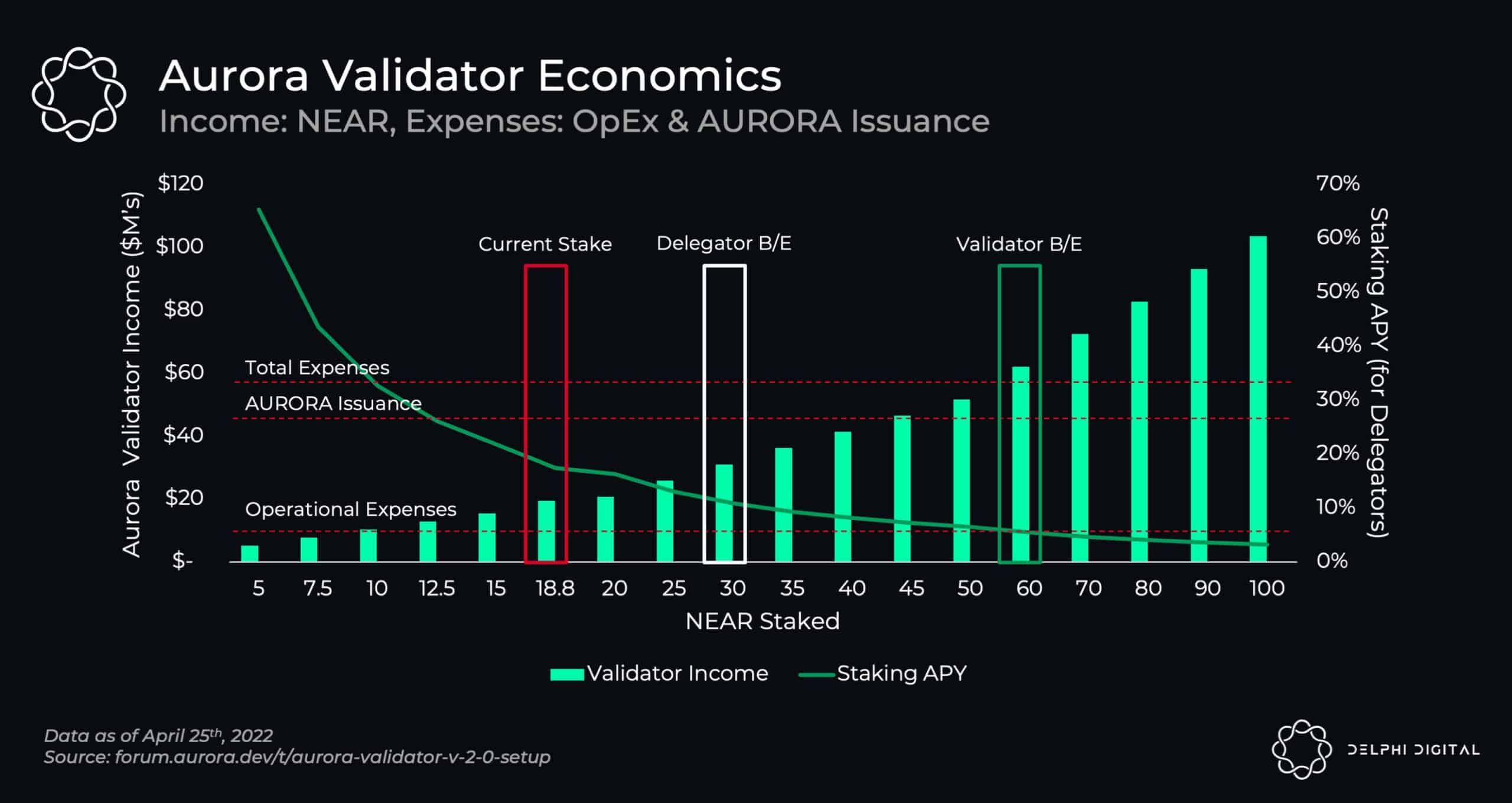
Core tools for Aurora EVM deployment
Building on Aurora EVM infrastructure requires a specific stack of development and infrastructure tools. The ecosystem is split between the underlying blockchain access and the higher-level chain deployment platforms. Selecting the right combination depends on whether you are building a single application or launching a dedicated virtual chain.
Infrastructure and Node Access
For most developers, the first step is securing reliable node access. Aurora is a Layer 2 solution built on NEAR Protocol, which means it inherits NEAR's scalability while providing full Ethereum Virtual Machine (EVM) compatibility. This architecture allows you to use standard Ethereum development tools like Hardhat or Foundry without modification.
QuickNode is a primary provider for this infrastructure layer. It offers dedicated Aurora nodes that handle the heavy lifting of block propagation and state management. Using a managed service like QuickNode ensures your application has the uptime and low-latency RPC endpoints required for production environments. You can access their Aurora-specific tooling and guides directly through their developer portal.
Aurora Cloud for Virtual Chains
If your goal is to launch a standalone virtual chain rather than just an application on the shared Aurora L2, Aurora Cloud is the dedicated platform for that task. Built on top of NEAR Protocol, Aurora Chains are EVM-compatible blockchains that inherit the full security and scalability of the NEAR network.
Aurora Cloud allows developers to deploy production-ready virtual chains with minimal operational overhead. This is distinct from using the standard Aurora L2; it gives you a dedicated chain environment while still leveraging the underlying NEAR infrastructure for consensus and finality. This approach is ideal for projects that require specific governance models or isolated economic environments.
Market Context
Understanding the token economics is part of the deployment strategy. The AURORA token is used for staking and governance within the ecosystem. Monitoring its performance helps gauge network health and community engagement.
Aurora EVM Infrastructure: Ecosystem Growth and Virtual Chains
The Aurora EVM infrastructure has evolved from a standard Layer 2 solution into a foundational platform for Aurora EVM infrastructure customization through its Virtual Chains model. Rather than offering a single monolithic chain, Aurora now functions as a smart contract on NEAR Protocol that allows developers to spin up fully customizable, EVM-compatible chains. This shift has redefined how the ecosystem approaches scalability, moving away from shared congestion toward dedicated throughput for specific use cases.
This architecture allows teams to deploy independent Virtual Chains that inherit Aurora’s security and EVM compatibility while maintaining their own tokenomics and governance. According to official documentation, these chains are designed to offer the speed and scalability that developers need without the overhead of building from scratch. The result is a fragmented but highly efficient ecosystem where different applications can run on optimized infrastructure tailored to their specific needs, whether that’s high-frequency trading or low-cost gaming.
Market performance reflects this structural shift. The AURORA token has seen volatility, currently trading around £0.020, with a slight 24-hour decline of -1.49% as of recent data. This price action mirrors broader market trends, but the underlying infrastructure growth remains distinct. The focus is no longer just on token price but on the utility of the Virtual Chains platform, which is attracting projects that require dedicated EVM environments without the complexity of native chain development.
| Feature | Aurora Virtual Chains | Ethereum L1 | Standard L2 |
|---|---|---|---|
| Customizability | High (Independent chains) | None | Low |
| Throughput | Dedicated per chain | Shared/High congestion | Shared |
| EVM Compatibility | Full | Native | Full |
| Deployment Speed | Fast (Smart contract) | N/A | Moderate |
The comparison above highlights why developers are increasingly viewing Aurora EVM infrastructure as a strategic choice for scalable deployments. By leveraging the Virtual Chains model, projects can bypass the bottlenecks of shared L2 networks while retaining the broad developer tooling and wallet support that EVM compatibility provides. This approach positions Aurora not just as another Layer 2, but as a meta-infrastructure layer that powers the next generation of specialized blockchain applications.
When to Choose Aurora EVM Infrastructure
Building on Aurora EVM infrastructure makes sense when your project demands Ethereum compatibility without the congestion and cost of the mainnet. It is not a one-size-fits-all solution, but it excels in specific architectural scenarios where speed and user experience are non-negotiable.
1. Consumer-Facing Applications
If your dApp targets mainstream users, transaction costs can be a dealbreaker. Aurora EVM infrastructure offers significantly lower gas fees compared to Ethereum L1, reducing friction for high-frequency interactions like gaming, social media, or micro-transactions. This cost efficiency is essential for retaining users who are sensitive to onboarding expenses.
2. High-Throughput Requirements
For applications requiring rapid finality and high transaction throughput, Aurora’s EVM compatibility within the NEAR Protocol ecosystem provides a robust foundation. It handles complex smart contract logic efficiently, making it suitable for DeFi protocols that need to execute multiple steps per transaction without the latency often seen on other L2s.
3. Gas Abstraction and UX
Aurora supports advanced gas abstraction patterns, allowing you to sponsor gas fees for your users. This capability lets you build a seamless experience where users interact with your app without needing to hold native tokens for gas, effectively lowering the barrier to entry for non-crypto-native audiences.
Review your current smart contract architecture. Ensure your code is optimized for the Aurora EVM environment, checking for any EVM equivalence nuances that might affect deployment.
Run simulations to compare gas costs on Ethereum L1 versus Aurora. Calculate the impact of gas sponsorship on your operational budget and user acquisition strategy.
Deploy your contract to the Aurora testnet. Integrate with Aurora Cloud for production-ready virtual chains if you need isolated, customizable environments for specific use cases.


As an Amazon Associate, we may earn from qualifying purchases.
| Feature | Aurora EVM | Ethereum L1 |
|---|---|---|
| Gas Costs | Low | High |
| Finality | Fast | Slower |
| EVM Compatibility | Full | Native |
Frequently asked questions about Aurora
What is Aurora Blockchain?
Aurora is a Layer 2 blockchain solution built on the NEAR Protocol that provides Ethereum Virtual Machine (EVM) compatibility with enhanced scalability and significantly lower transaction costs. This infrastructure allows developers to deploy existing Ethereum smart contracts on NEAR without rewriting code, effectively bridging two major ecosystems.
What happened to Aurora Crypto today?
The price of Aurora (AURORA) fluctuates with broader market conditions. As of today, 1 AURORA costs £0.020, representing a change of +0.05% in the last hour and -1.49% in the last 24 hours. For real-time market data and technical analysis, refer to the widget below.
Are Aurora NFTs a good investment?
Aurora holds potential as an investment due to its role as an Ethereum-compatible solution on the NEAR blockchain, but its long-term viability depends on adoption, ecosystem growth, and market conditions. Investors should evaluate the network's developer activity and transaction volume alongside price action.
No comments yet. Be the first to share your thoughts!