How virtual chains redefine EVM scaling
Aurora EVM infrastructure works differently than most Layer 2 solutions. Instead of building a separate blockchain with its own consensus rules, Aurora runs as a smart contract on the NEAR Protocol. This approach treats Ethereum-compatible chains as "virtual chains" that live directly on NEAR's mainnet.
This architecture shifts the scaling burden. Traditional rollups must manage their own sequencers, data availability layers, and complex bridge security. Aurora delegates these tasks to NEAR. Developers get the familiar Ethereum environment without the overhead of managing a new consensus layer. The result is a system where multiple EVM chains can share NEAR's high throughput and low fees.
The technical foundation relies on a pure Rust implementation of the EVM. This codebase, available on GitHub, is designed for security and efficiency. It allows Aurora to process transactions quickly while maintaining compatibility with existing Ethereum tools and wallets. By running as a contract, Aurora inherits NEAR's network effects and security model.
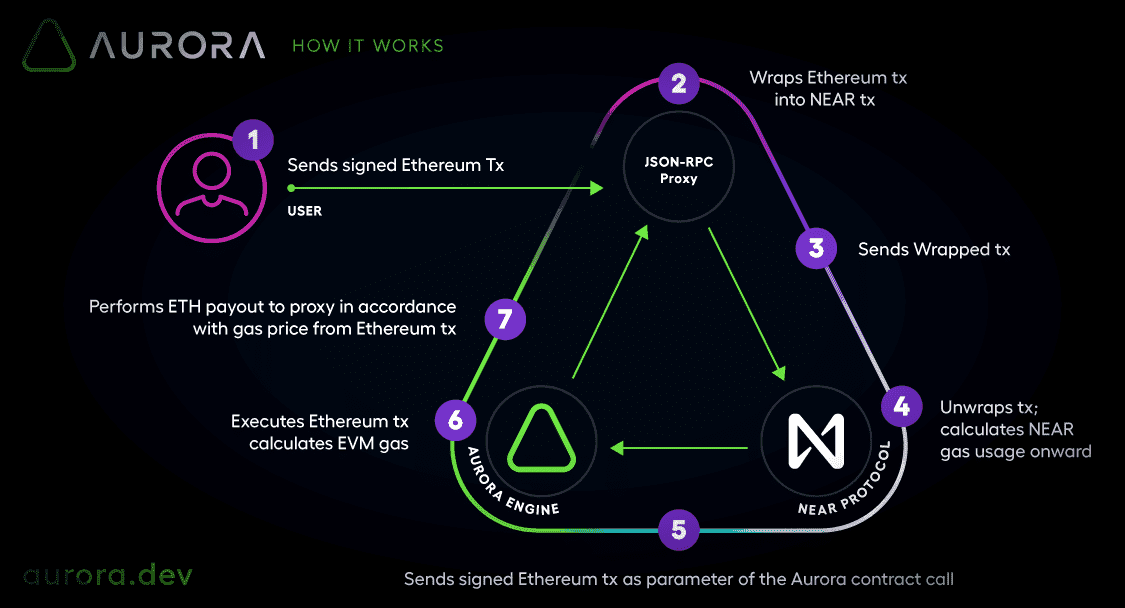
This structure enables a unique scaling strategy. Rather than competing for block space on a single chain, Aurora offers customizable virtual chains. Each chain can be tailored to specific needs, from gaming to decentralized finance, while still benefiting from the underlying NEAR infrastructure. This modularity is the core of Aurora's approach to EVM scaling.
The aurora evm infrastructure stack
Aurora operates as a Layer 2 solution built directly on the NEAR Protocol, bridging Ethereum’s ecosystem with NEAR’s scalability. This architecture allows developers to deploy existing Ethereum Virtual Machine (EVM) smart contracts without modification, while benefiting from NEAR’s high throughput and low latency. The core of this infrastructure is a pure Rust implementation of the EVM, which prioritizes security and efficiency over compatibility with older, slower EVM versions.
The technical foundation relies on Aurora’s consensus mechanism, which leverages NEAR’s Nightshade sharding. This allows the network to process transactions in parallel, significantly reducing congestion. By running as a contract on NEAR, Aurora inherits NEAR’s robust security model while maintaining full EVM compatibility. This setup ensures that the infrastructure remains resilient against attacks while processing transactions at speeds far exceeding the Ethereum mainnet.
Performance metrics are a defining feature of the aurora evm infrastructure. Transactions are finalized in seconds rather than minutes, and fees remain consistently low due to the efficient sharding mechanism. This performance profile makes it particularly attractive for high-frequency applications like decentralized exchanges and gaming, where speed and cost are critical. The infrastructure’s design ensures that as NEAR scales, Aurora’s capacity grows alongside it.
Essential tools for Aurora developers
Building on Aurora EVM infrastructure requires a specific stack of SDKs, bridges, and node providers. These tools bridge the gap between Ethereum development practices and Aurora’s Layer 2 environment on NEAR Protocol. Without the right components, developers face unnecessary friction in deployment, testing, and cross-chain asset movement.
The ecosystem offers three critical pillars for infrastructure: development frameworks, node access, and interoperability. Selecting the right combination depends on your project's scale and technical requirements.
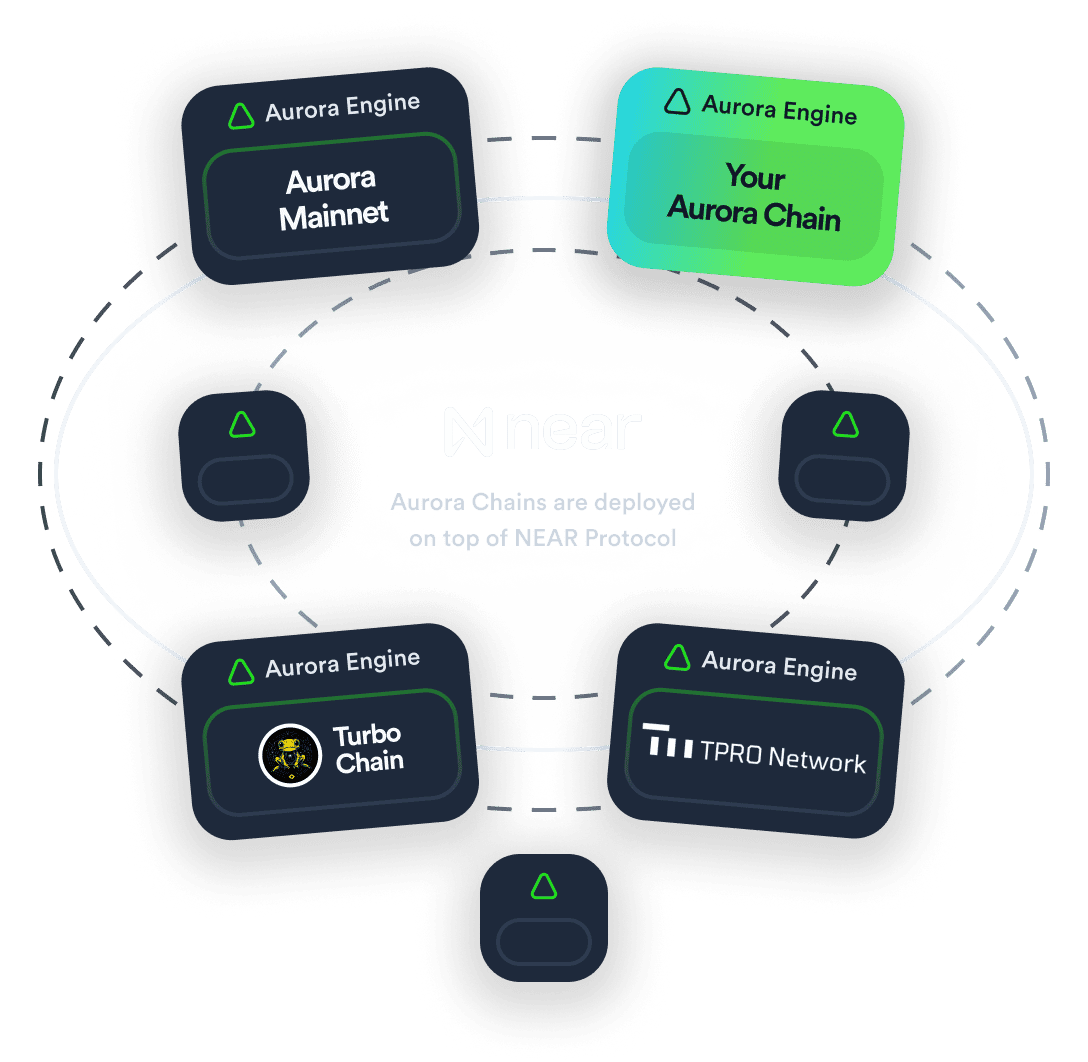
Frameworks: Thirdweb
Thirdweb provides a comprehensive suite of SDKs and pre-built smart contracts that simplify dApp creation. It supports Aurora out of the box, allowing developers to deploy wallets, NFTs, and marketplaces with minimal boilerplate. This approach reduces the time from concept to mainnet launch, making it ideal for teams prioritizing speed and ease of integration.
Node Infrastructure: QuickNode
For reliable RPC access, QuickNode offers dedicated Aurora endpoints. These nodes handle the heavy lifting of block synchronization and transaction processing, ensuring your application remains responsive even during high network congestion. QuickNode’s infrastructure is particularly useful for production environments where uptime and latency are critical.
Cross-Chain: Rainbow Bridge
The Rainbow Bridge is the primary trustless bridge for moving assets between Ethereum and Aurora. It allows developers to lock ETH or ERC-20 tokens on Ethereum and mint corresponding assets on Aurora. This mechanism is essential for any application that needs to leverage Ethereum’s liquidity while benefiting from Aurora’s low fees and fast finality.
Tool Comparison
Choosing the right tools involves balancing ease of use, cost, and technical depth. The following comparison highlights the core value propositions of these essential components.
| Tool | Category | Primary Use | Cost |
|---|---|---|---|
| Thirdweb | Framework | Rapid dApp deployment | Free tier + usage fees |
| QuickNode | Node Provider | High-performance RPC access | Subscription based |
| Rainbow Bridge | Bridge | ETH/Aurora asset transfer | Gas fees only |
Scaling strategies for virtual chains
Use this section to make the Aurora EVM Infrastructure decision easier to compare in real life, not just on paper. Start with the reader's actual constraint, then separate must-have requirements from details that are merely nice to have. A practical choice should survive normal use, maintenance, timing, and budget. If a recommendation only works in an ideal situation, call that out plainly and give the reader a fallback path.
The simplest way to use this section is to write down the must-have criteria first, then compare each option against those criteria before weighing nice-to-have features.
Common questions about Aurora EVM
Helpful gear
Use these product recommendations as a starting point, then choose the size, material, and price point that fit how you actually use the gear.

As an Amazon Associate, we may earn from qualifying purchases.
No comments yet. Be the first to share your thoughts!