How Aurora Runs on NEAR
Aurora does not sit on top of NEAR as a separate Layer 2 rollup. Instead, it operates as a "Virtual Chain," which means the entire Ethereum Virtual Machine (EVM) is implemented as a single smart contract deployed directly on the NEAR blockchain. This architecture allows Aurora to inherit NEAR’s sharding and security model without the complexity of maintaining a separate consensus layer or bridge infrastructure.
From a technical standpoint, Aurora is a high-performance, pure Rust implementation of the EVM. It runs inside the NEAR runtime, treating Ethereum state as data within a NEAR account. This design choice is significant because it eliminates the need for optimistic or zero-knowledge proof verification for every transaction. Instead, Aurora transactions are processed as standard NEAR function calls, leveraging NEAR’s Nightshade sharding to achieve high throughput and low latency.
This structure distinguishes Aurora from traditional L2 solutions like Arbitrum or Optimism. Those networks rely on sequencers and fraud or validity proofs to settle state on Ethereum. Aurora, by contrast, settles state on NEAR. Developers can deploy standard Solidity contracts that interact with NEAR accounts, effectively bridging the two ecosystems at the protocol level. The result is an EVM-compatible environment that scales with NEAR’s throughput rather than Ethereum’s base layer.
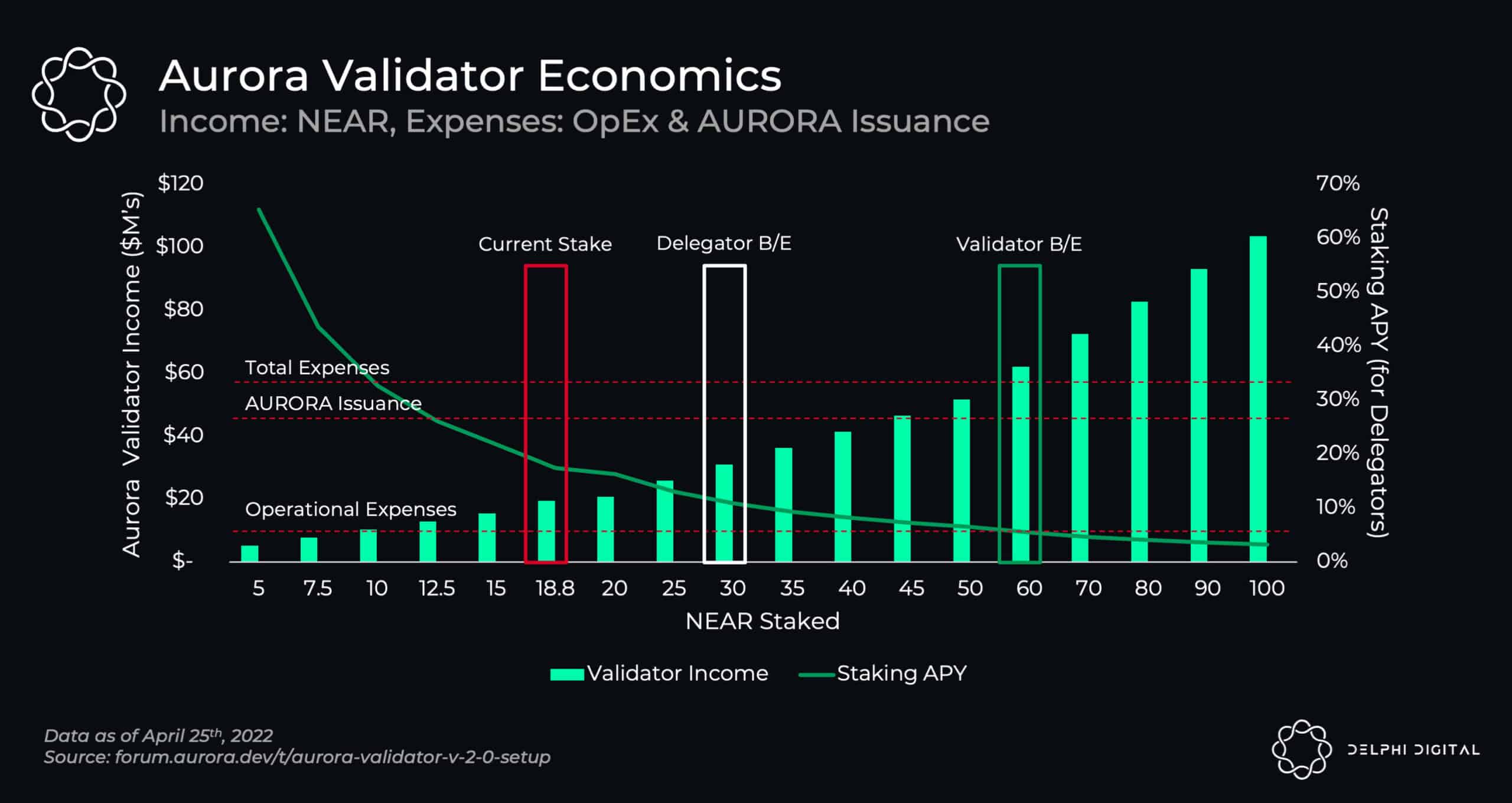
The implications for developers are straightforward. You can use familiar Ethereum tooling—Hardhat, Foundry, or Remix—while accessing NEAR’s high-speed finality. However, this architecture also means Aurora’s security is tied to NEAR’s consensus. If NEAR experiences a network issue, Aurora is affected directly, as they share the same underlying ledger. This tight coupling is the trade-off for the simplified infrastructure and lower costs.
How the Virtual Chain Model Scales
Aurora achieves high throughput by running as a Layer 2 solution on top of NEAR Protocol. Instead of processing every transaction on a single chain, Aurora leverages NEAR's Nightshade sharding. This architecture allows the network to split data and computation across multiple shards, enabling parallel processing that dramatically increases transaction capacity.
The virtual chain model means each Aurora chain inherits NEAR's consensus and security. This eliminates the need for separate validator sets or complex bridge mechanisms. Developers get EVM compatibility without sacrificing the scalability that comes from sharded execution. The result is a system that can handle thousands of transactions per second with low latency.
This infrastructure approach keeps costs low for end users while maintaining robust security guarantees. By relying on NEAR's underlying layer, Aurora avoids the congestion and high gas fees common in standalone Layer 1 networks. The model is designed for developers who need production-ready scalability without managing complex cross-chain infrastructure.
Essential tools for Aurora developers
Building on Aurora means working within the EVM ecosystem, but the underlying NEAR Protocol infrastructure introduces specific nuances. To ship production-ready applications, you need a stack that handles high-throughput transaction finality and cross-chain interoperability without friction. The following tools and providers form the backbone of the Aurora development workflow.
QuickNode: Infrastructure and APIs
For most teams, QuickNode serves as the primary gateway to the Aurora network. It provides managed RPC endpoints that abstract away the complexity of running full nodes. The Aurora-specific endpoints are optimized for the NEAR execution layer, offering higher reliability and lower latency than public endpoints. QuickNode also offers developer tools like webhooks for real-time transaction monitoring and analytics dashboards that track gas usage and block times. This infrastructure layer is critical for dApps that require consistent uptime and predictable response times.
Aurora Cloud: Virtual Chains
If your application requires dedicated isolation or custom consensus parameters, Aurora Cloud allows you to deploy "Aurora Chains." These are EVM-compatible virtual chains built on top of NEAR Protocol. They inherit NEAR's security and scalability while allowing you to configure tokenomics, governance, and gas models specific to your project. This is particularly useful for enterprise use cases or gaming platforms that need to separate user data and transactions from the mainnet while still benefiting from the Aurora ecosystem's liquidity and tooling.
SDKs and Development Frameworks
Standard Ethereum development tools like Hardhat and Foundry work out of the box with Aurora. The Aurora SDK provides language-specific libraries (JavaScript, Python, Go) that simplify interactions with the NEAR bridge and Aurora smart contracts. Key features include:
- Bridge Utilities: Simplified functions for depositing and withdrawing ETH/ERC-20 tokens between Ethereum and Aurora.
- NEAR Account Abstraction: Integration with NEAR's account model for social login and gas sponsorship features.
- Testing Environments: Local testnets that mirror Aurora's EVM behavior for rigorous smart contract testing.
Hardware Wallets and Developer Kits
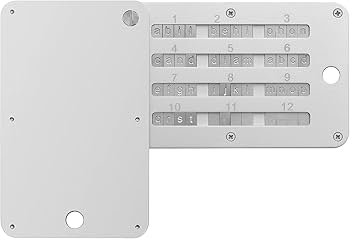
Securing development keys and managing multi-signature wallets is a critical part of the infrastructure. For teams handling significant treasury assets or deploying contracts, hardware wallets like Ledger and Trezor provide offline key storage. Many developers also use specialized developer kits that include secure element chips for signing transactions in isolated environments. These tools ensure that private keys never touch the host machine, reducing the risk of compromise during the deployment process.


As an Amazon Associate, we may earn from qualifying purchases.
Monitoring and Analytics
Once your dApp is live, monitoring transaction success rates and gas consumption is essential. Block explorers like AuroraScan provide real-time data on contract interactions, token transfers, and network health. For deeper analytics, tools like Dune Analytics allow you to write SQL queries against Aurora's on-chain data to build custom dashboards. Integrating these monitoring tools early in the development cycle helps you identify bottlenecks and optimize gas usage before scaling to mainnet.
Aurora vs Other EVM L2s
Choosing an Ethereum Virtual Machine (EVM) Layer 2 isn't just about picking the cheapest gas; it's about selecting the underlying infrastructure that dictates your security model, finality speed, and developer experience. While most L2s are built as rollups on top of Ethereum, Aurora takes a distinct architectural path by operating as a smart contract on the NEAR Protocol.
This structural difference creates a unique trade-off. Aurora leverages NEAR's sharding for scalability while maintaining full EVM compatibility, allowing developers to deploy Solidity contracts without modification. Below is a side-by-side comparison of Aurora against other major EVM L2 solutions to help you evaluate which infrastructure aligns with your project's needs.
| Project | Architecture | Finality | EVM Compatibility |
|---|---|---|---|
| Aurora | NEAR Shard | ~1-2s | Full |
| Arbitrum | Optimistic Rollup | ~7 days | Full |
| Optimism | Optimistic Rollup | ~7 days | Full |
| Base | Optimistic Rollup | ~7 days | Full |
| zkSync | ZK Rollup | ~15 mins | Partial |
| Polygon zkEVM | ZK Rollup | ~2-4 hours | Full |
The table highlights a critical distinction: finality. Optimistic rollups like Arbitrum and Optimism require a seven-day challenge period for withdrawals, which can be a bottleneck for user experience. Aurora, running on NEAR, offers near-instant finality because it relies on NEAR's consensus mechanism rather than Ethereum's sequencer-based dispute resolution. ZK rollups like Polygon zkEVM offer faster finality than Optimistic rollups but often require specialized tooling or partial EVM compatibility, which can complicate deployment for existing Ethereum developers.
For developers prioritizing speed and lower costs without sacrificing full EVM compatibility, Aurora's integration with NEAR provides a compelling alternative. However, if your project requires the highest level of security guarantees provided by Ethereum's native settlement layer, an Optimistic or ZK rollup might be more suitable despite the slower withdrawal times.
Strategic considerations for 2026
Aurora’s 2026 strategy centers on expanding its "network of virtual chains" model. By allowing developers to spin up fully customizable, EVM-compatible chains as smart contracts on NEAR, Aurora shifts from a single Layer 2 solution to an infrastructure provider for specialized rollups. This architecture offers the scalability and speed required for high-throughput applications while maintaining Ethereum compatibility.
For developers, this means lower transaction costs and enhanced flexibility without sacrificing security. However, managing liquidity fragmentation across multiple virtual chains remains a technical hurdle. Success in 2026 will depend on Aurora’s ability to unify liquidity and provide seamless cross-chain interoperability tools.
The ecosystem is also evolving toward a universal trading protocol. This initiative aims to power one-click cross-chain swaps and unified liquidity for onchain markets. As the network matures, the focus will shift from raw scalability to developer experience and capital efficiency across the virtual chain landscape.
Common questions about Aurora
What is Aurora Blockchain?
Aurora is a Layer 2 blockchain solution built on the NEAR Protocol that provides Ethereum Virtual Machine (EVM) compatibility with enhanced scalability and significantly lower transaction costs. It allows developers to deploy Solidity smart contracts directly on NEAR, bridging the gap between Ethereum’s developer ecosystem and NEAR’s high throughput.
What is Aurora in the NFT world?
In the NFT space, Aurora functions as a universal trading protocol. It powers one-click cross-chain swaps and provides unified liquidity for onchain markets and tokenized assets. This infrastructure allows NFTs to move and trade efficiently across different chains without the friction typically associated with multi-chain bridges.
Is Aurora safe to use?
Aurora’s security is anchored by the NEAR Protocol’s Proof-of-Stake consensus. While it inherits NEAR’s robust security model, users should always verify contract audits and stick to official bridges. As with any Layer 2 solution, understanding the specific withdrawal timelines and bridge mechanisms is essential for risk management.
No comments yet. Be the first to share your thoughts!