Aurora evm limits to account for
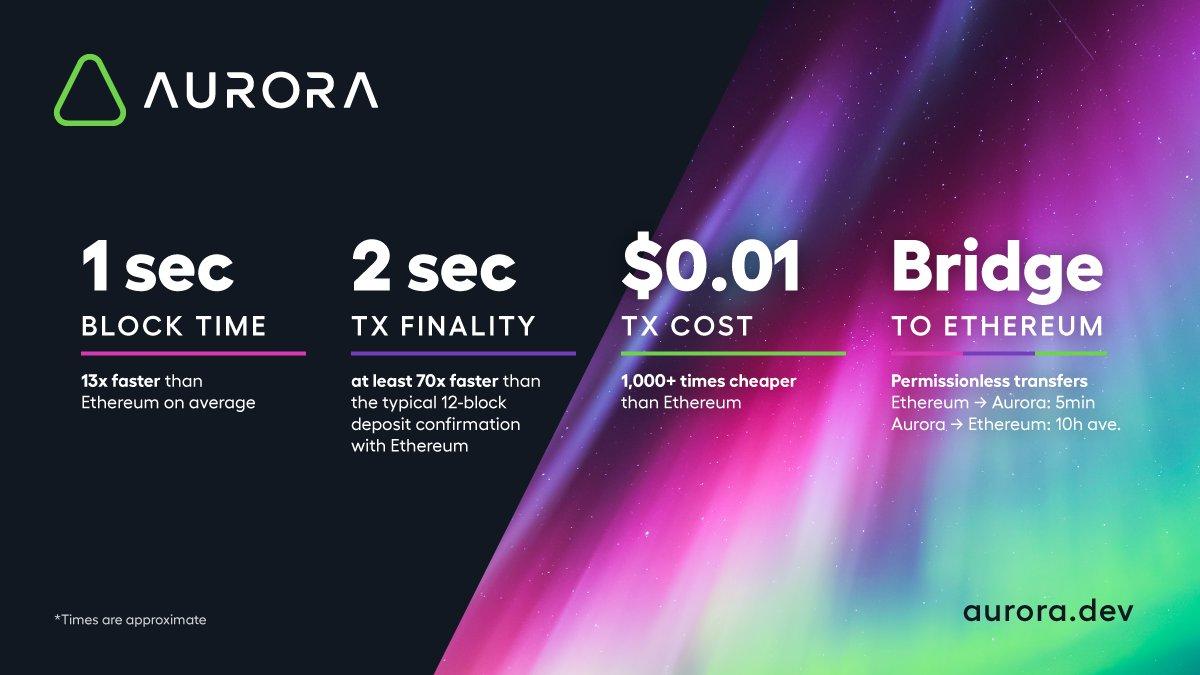
Aurora is fully EVM-compatible, meaning it runs Ethereum Virtual Machine code natively on the NEAR Protocol. This architecture allows developers to use familiar tools like Hardhat and Remix without rewriting smart contracts for a new environment. The primary constraint lies in the underlying settlement layer: Aurora relies on NEAR's sharding for throughput, which changes how gas and state are managed compared to Ethereum L1.
For builders, this means your existing Solidity code works, but you must account for NEAR's economic model. Gas is paid in NEAR tokens, not ETH, and transaction finality is faster but depends on NEAR block times. This setup offers high scalability and low costs, but it requires understanding cross-chain mechanics if you plan to bridge assets between Ethereum and NEAR.
| Feature | Aurora EVM | Ethereum L1 |
|---|---|---|
| Compatibility | Full EVM | Native EVM |
| Gas Token | NEAR | ETH |
| Finality | ~1-2 seconds | ~12-15 minutes |
| Throughput | High (NEAR Sharding) | Low (Base Layer) |
The tradeoff is clear: you gain speed and lower fees by leveraging NEAR’s infrastructure, but you lose the direct security guarantee of Ethereum’s mainnet. If your project requires maximum decentralization and security over speed, Ethereum L1 or an L2 like Arbitrum might be better. If you prioritize developer experience and cost efficiency, Aurora’s EVM constraint is a manageable feature, not a blocker.
Aurora evm choices that change the plan
Aurora is an Ethereum Virtual Machine (EVM) compatible network built on the NEAR Protocol. It allows developers to deploy existing Ethereum smart contracts and tools without rewriting code, while leveraging NEAR’s sharding for higher throughput. The tradeoff is a dual-layer architecture that requires understanding both EVM mechanics and NEAR’s specific settlement layer.
Aurora vs. Ethereum vs. BNB Smart Chain
The primary decision for developers is whether Aurora’s NEAR-based architecture offers enough advantage over legacy EVM chains to justify the integration complexity. Aurora competes directly with Ethereum Layer 2s and BNB Smart Chain (BSC) on gas costs and speed, but differs in its underlying consensus and bridge mechanics.
| Feature | Aurora | Ethereum L2 | BNB Smart Chain |
|---|---|---|---|
| Base Layer | NEAR Protocol | Ethereum L2 Rollup | BSC Chain |
| Gas Token | ETH | ETH | BNB |
| Finality | ~1-2 minutes | Minutes to hours | ~1 second |
| EVM Compatibility | Full EVM | Full EVM | Full EVM |
| Max TPS | ~1,000+ | ~10-100 | ~160 |
When to choose Aurora
Aurora is best suited for applications that require low transaction fees and high throughput while maintaining full EVM compatibility. Because it uses ETH as the gas token, it attracts developers and users already embedded in the Ethereum ecosystem who want to escape high L1 gas fees without switching to a different token standard. The integration with NEAR’s account model also offers a smoother onboarding experience for non-crypto-native users through account abstraction.
When to avoid Aurora
Developers should avoid Aurora if their primary concern is absolute decentralization or if they require sub-second finality. The reliance on NEAR’s bridge for security means that users must trust the cross-chain bridge mechanism, which is a common attack vector in multi-chain ecosystems. Additionally, if your application requires deep integration with NEAR-specific features (like NFTs or sharding) that don’t translate to EVM, a native NEAR dApp might be more efficient than an EVM wrapper.
Choose the next step
Aurora EVM works best as a clear sequence: define the constraint, compare the realistic options, test the tradeoff, and choose the path with the fewest hidden costs. That order keeps the advice usable instead of decorative. After each step, pause long enough to check whether the recommendation still fits the reader's actual situation. If it depends on perfect timing, unusual access, or a best-case budget, include a simpler fallback.
Spotting the Weak Options
Many developers assume EVM compatibility is a universal standard, but Aurora’s architecture introduces specific tradeoffs that can trip up teams migrating from Ethereum or BNB Smart Chain. Understanding these nuances prevents wasted effort and ensures your infrastructure choices align with your actual use case.
The Wallet Confusion
A common mistake is assuming an Ethereum wallet address works identically across all EVM chains. While Aurora shares the same address format as Ethereum, the underlying network context matters. Sending tokens to an Aurora address from an Ethereum wallet without selecting the correct network results in lost funds. Always verify the network selection in your wallet interface before interacting with Aurora dApps. This distinction is critical for security and user experience.
BNB Smart Chain vs. Aurora
BNB Smart Chain offers low fees and high throughput, making it attractive for high-frequency trading. However, Aurora leverages NEAR Protocol’s sharding technology, which can offer better scalability for certain application types. If your project relies on heavy on-chain computation, Aurora’s parallel execution model may outperform BSC’s linear processing. Evaluate your specific gas costs and latency requirements rather than defaulting to one chain over the other.
Aurora’s Unique Position
Aurora is not just another EVM chain; it is deeply integrated with the NEAR ecosystem. This provides unique interoperability features but also ties your project’s success to NEAR’s broader network health. For developers seeking maximum decentralization and Ethereum equivalence, Aurora’s EVM compatibility is strong, but the dependency on NEAR’s consensus layer is a strategic consideration. Review the official documentation to understand the specific governance and upgrade mechanisms.
Aurora evm: what to check next
Before deploying on Aurora, clarify how the network fits your stack and treasury. Aurora is an EVM-compatible chain built on NEAR Protocol, meaning you use standard Ethereum tools like Hardhat or Remix, but transactions settle on NEAR. This structure offers high throughput and lower costs, but it introduces specific bridge and liquidity dynamics that differ from native Ethereum L2s.
The key trade-off is simplicity versus native security. You get Ethereum developer familiarity and NEAR’s speed, but you must manage bridging risks between ETH and the NEAR ecosystem. Always verify contract compatibility with Aurora’s specific fork of the EVM before mainnet deployment.
No comments yet. Be the first to share your thoughts!